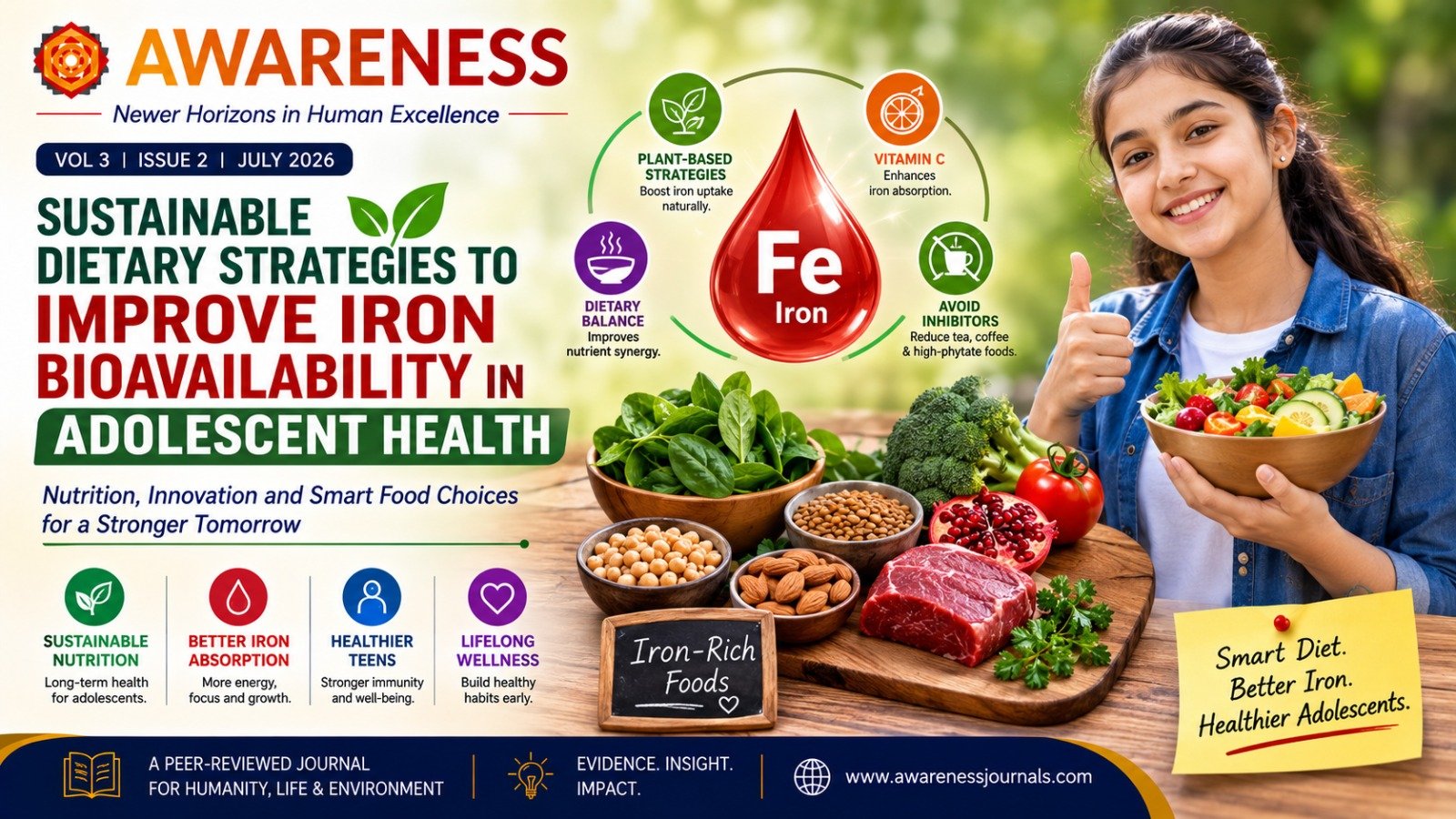
Sustainable Dietary Strategies to Improve Iron Bioavailability in Adolescent Health
- Aug 11, 2026
- 123 views
Abstract
Background: Anaemia remains a major prevalent public health concern among adolescent girls globally, driven by increased physiological needs during growth and menstruation, inadequate intake of iron, folate, and vitamin B12, and socioeconomic constraints. These micronutrients are key components in oxygen transport, immune regulation, and cell proliferation and their deficiency during adolescence can compromise immune function, impair growth, and increase long-term reproductive risks. Addressing adolescent micronutrient deficits ensures long-term health. This narrative review synthesises current evidence on sustainable, locally sourced dietary approaches to enhance the iron status in adolescents, with a specific focus on enhancing the bioavailability of non-haem iron from plant-based foods.
Methods: We searched PubMed, Scopus, Web of Science, and Google Scholar for peer-reviewed literature (January 2000 – December 2025) regarding adolescent iron deficiency, non-haem bioavailability, and food system nutrition interventions.
Results: Vitamin C and carotenoids are potent enhancers of non-haem iron absorption. To optimise a plant-based diet, consuming three to four iron-rich meals or snacks daily alongside concurrent vitamin C enhancers is recommended. Sustaining this dietary pattern for three to six months is typically required to observe measurable increases in haemoglobin and iron stores. Given the global rise of plant-based diets and the prevalence of lacto-vegetarianism in India, vitamin B12 deficiency is highlighted as a frequently underdiagnosed contributor to anaemia, with dairy foods and fortified products recommended as accessible dietary sources.
Conclusions: Overall, locally grounded, sustainable, bioavailability-focused dietary interventions represent a practical and environmentally responsible strategy to enhance adolescent health and reduce the burden of anaemia.
Full Text
Main Message
Preventing adolescent anaemia requires more than increasing iron intake. Sustainable dietary practices that enhance iron bioavailability through locally available foods, appropriate meal combinations, and traditional food preparation methods provide a realistic, long-term solution that complements supplementation while supporting both human and environmental health.
Introduction
Anaemia remains a major global public health challenge despite decades of intervention efforts demonstrating positive outcomes in controlled settings, particularly through iron supplementation, food fortification and nutrition education. However, population-level success has been limited by barriers such as poor adherence, gastrointestinal side effects, resource constraints, economic disparities and inequities in access. As a result, anaemia prevalence continues to rise alongside population growth, contributing to increased morbidity and mortality in women and children, reduced productivity in adults, and impaired cognitive and behavioural development in young children. Adolescent girls are especially vulnerable due to rapid growth, menstrual onset and common dietary inadequacies, placing them at heightened risk of iron-deficiency anaemia, which affects cognitive function, work capacity, immunity and future pregnancy outcomes. Thus, the growing burden of anaemia, particularly amongst reproductive-aged women (15 to 49 years), has underscored the necessity to develop complementary and sustainable solutions that can be easily incorporated into everyday food habits over a long duration.
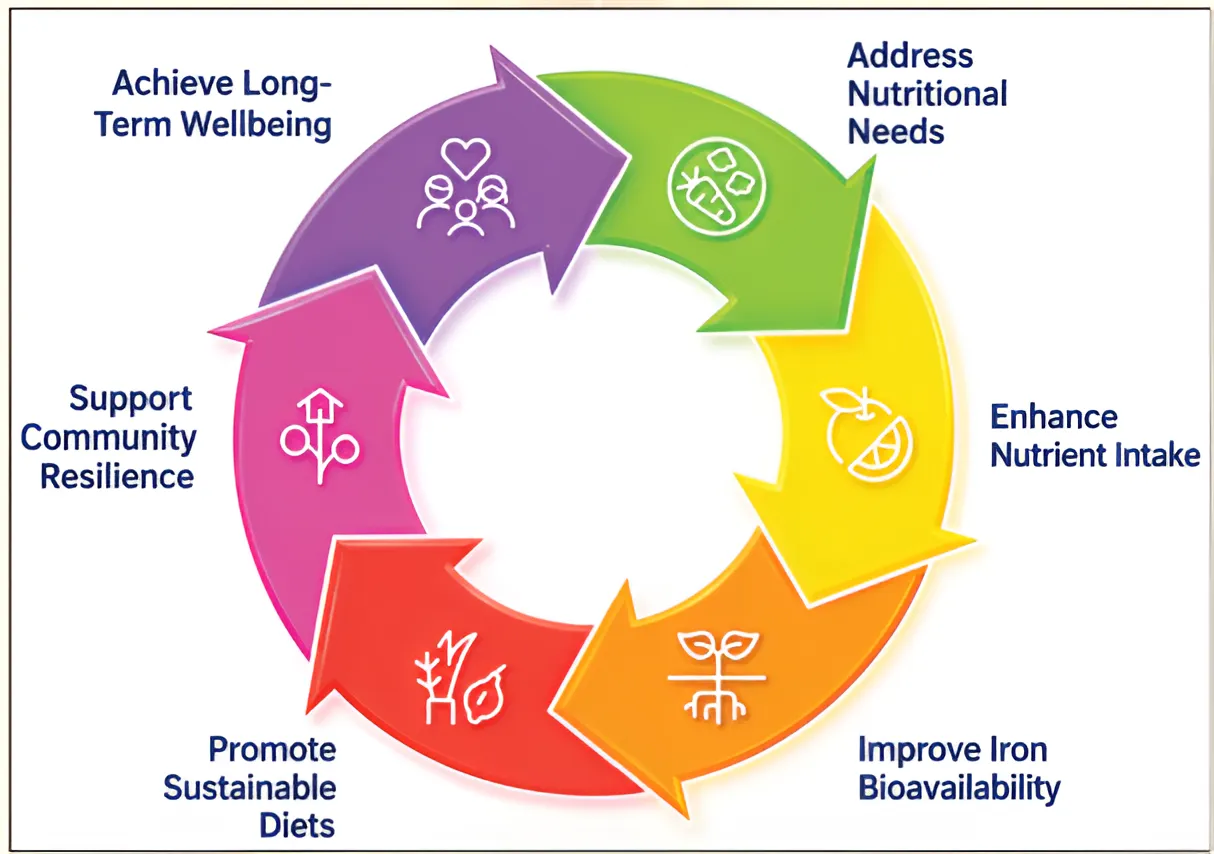
These persistent challenges in conventional strategies have led to a growing interest in longterm, food-based solutions. Sustainable dietary approaches prioritise nutritional adequacy, affordability, cultural relevance and environmental responsibility, aiming to improve individual health while supporting ecosystem integrity. Within this context, plant-based foods represent a promising source of dietary iron, particularly when aligned with local food systems that enhance micronutrient intake and build food system resilience. However, the bioavailability of non-haem iron from plant sources is often low due to dietary inhibitors, reinforcing the need for strategies to enhance iron absorption, such as including vitamin C-rich foods, carotenoids, traditional food preparation methods, and appropriate meal combinations.
This narrative review explores sustainable dietary patterns as a complementary approach to reducing anaemia, with a focus on enhancing non-haem iron bioavailability in adolescents. The review examines evidence on local, plant-based foods, traditional food processing and dietary diversification, considering their potential to improve iron status, support long-term health outcomes, and contribute to sustainable nutrition frameworks.
Materials and Methods
This narrative review was based on a thorough literature search for relevant studies published between January 2000 and December 2025. Computerized searches of primary electronic databases (PubMed, Scopus, Web of Science and Google Scholar) were performed for peer reviewed literature on adolescent anaemia, iron deficiency, iron bioavailability, sustainable diets and local food system-based nutrition strategies. The search strategy used various keyword combinations and Boolean operators, including "adolescent anaemia," "iron deficiency," "iron bioavailability," "non-haem iron," "plant-based diets," "sustainable nutrition," "local food systems," "dietary diversification," and "nutrition education."
Database filters were used to limit results by publication type, language, and relevance to human nutrition and public health. Eligible studies included original research articles, systematic reviews, meta-analyses, and authoritative reports from international health agencies on dietary approaches, food-based interventions, traditional food processing strategies, or sustainability-oriented practices focused on improving iron status among adolescents. Emphasis was given to evidence on factors affecting non-haem iron absorption, dietary enhancers and inhibitors, nutritionally favourable traditional eating patterns and environmentally sustainable models of nutrition.
Exclusion criteria were conference abstracts, case reports, opinion papers, non-peer-reviewed articles and articles published in a language other than English. Studies in animals and research not directly pertinent to adolescent nutrition or iron were also excluded. Reference lists of included articles were manually searched to identify potential additional studies. The included literature was qualitatively synthesised to generate a holistic understanding of sustainable, locally produced dietary strategies that can be utilised to increase the bioavailability of dietary iron among adolescents. This systematic methodological approach adds to the rigour and credibility of the review by reducing selection bias and provides a sound basis for assessing sustainable diets with respect to adolescent health and anaemia prevention.
Anaemia
One-quarter of the global population is affected by anaemia. Anaemia is a serious global public health ailment affecting both developed and developing countries, with young children (0-5 years), women of childbearing age and pregnant women a greater risk. In 2021, anaemia affected over 1.9 billion people worldwide, an increase of 420 million cases over the past three decades. The Global Burden of Diseases, Injuries and Risk Factors Study (GBD) estimated that anaemia accounts for 52 million years lived with disability in 2021.
Despite multiple global health efforts, little progress has been observed in some population groups. For example, anaemia prevalence among women of reproductive age remains high at 30% with rates showing minimal changes over the last two decades. Consequently, the WHO has extended its target to reduce the prevalence of anaemia by half in women of reproductive age by 2030.
Iron deficiency anaemia (IDA) is the most common form of anaemia, accounting for approximately half of all anaemia cases globally, and it is the leading cause of morbidity in women. In adults, IDA can lead to adverse outcomes such as reduced physical capacity, impaired thermoregulation, immune dysfunction, gastrointestinal disturbances and cognitive impairment. The second most common cause of anaemia is anaemia of chronic diseases associated with conditions such as cancer, chronic kidney disease, congestive heart failure, human immunodeficiency virus and rheumatoid arthritis, leading to diminished quality of life and increased mortality.
In pregnancy, anaemia is associated with serious maternal and foetal complications, including preterm labour, intrauterine growth restriction, stillbirth, infections, and maternal and neonatal mortality. Nutritional deficiencies of folate and vitamins B12 also contribute to anaemia, most commonly due to inadequate dietary intake. Less frequently, deficiencies in vitamins A and E, thiamine, pyridoxine, and copper have also been identified as causes of anaemia.
Anaemia in Adolescence
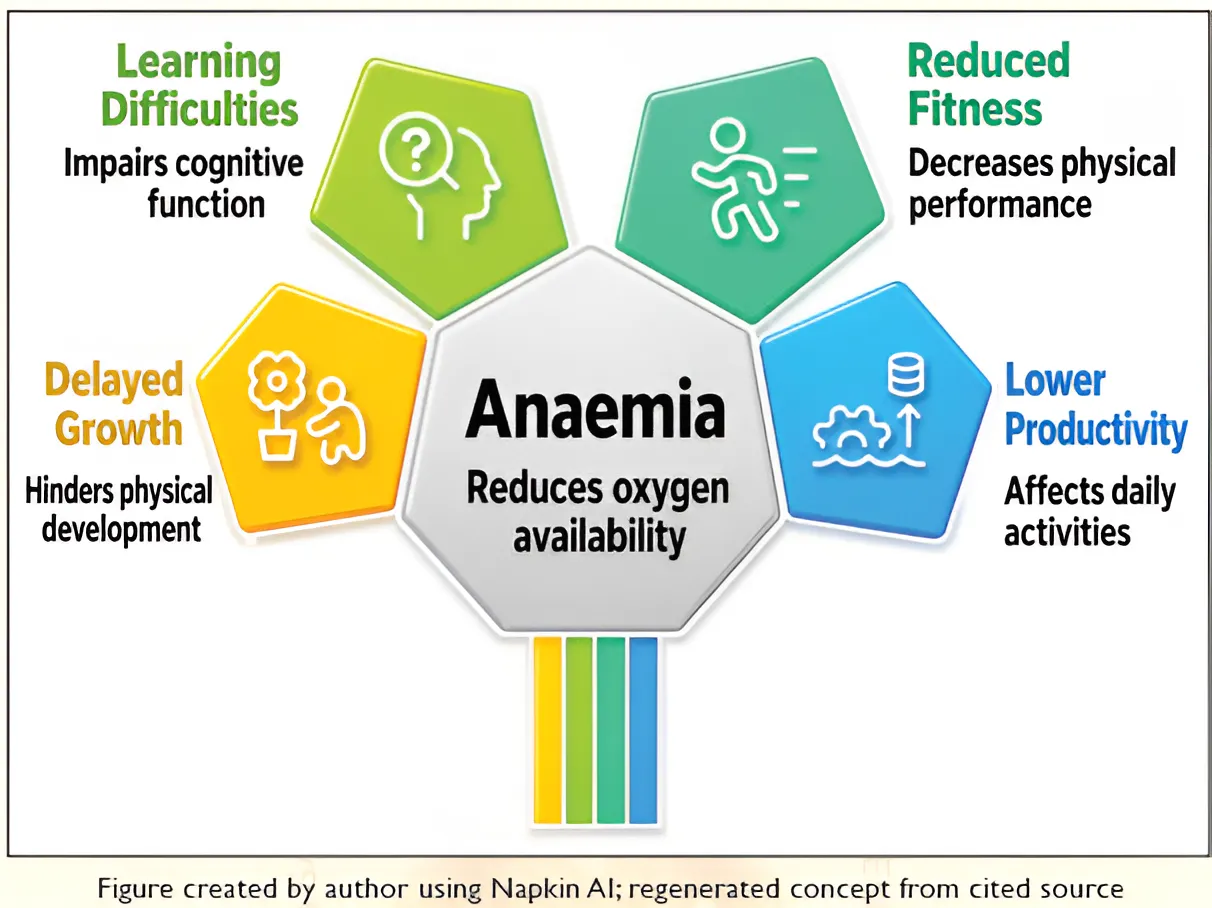
Anaemia can significantly affect adolescents' growth and development. It is associated with developmental delay, learning difficulties, reduced concentration, diminished physical fitness and decreased productivity. Causes of anaemia in adolescence include poor diet, poverty, increased iron requirements due to physiological changes of rapid growth, intestinal worm infection, blood loss (particularly from heavy menstrual bleeding) and early conception.
Adolescent females are particularly vulnerable due to increased physiological demands and the onset of menstruation. Other contributing factors include rural residence, low socioeconomic status, underweight status, and early menarche. Social influences (such as marketing, sponsorship, advertising and peer-pressure) also shape dietary behaviours, often promoting higher intake of convenient, processed, and fast foods.
Role of Nutrition in Anaemia and Haem Synthesis
Nutrition plays a central role in haemoglobin formation and red blood cell maturation, both of which are essential for effective oxygen transport. Haemoglobin is the oxygen-carrying protein within red blood cells, supporting energy delivery throughout the body; when production is compromised, individuals may experience fatigue, weakness and shortness of breath.
Iron, vitamin B12 and folate are integral to haem synthesis and erythropoiesis, contributing to processes such as DNA replication, cell proliferation, and haemoglobin assembly. Other micronutrients, including zinc, copper, and vitamin A, also support red blood cell development, immune function and overall cell function. Iron, in particular, plays a critical role in DNA synthesis, energy production, and immune function.
While iron deficiency is the most common form of nutrition-related anaemia, insufficient intake of vitamin B12 and folate gives rise to megaloblastic anaemia, characterized by the production of abnormally large, immature red blood cells that are structurally defective, prone to premature destruction, and unable to carry oxygen effectively. In megaloblastic anaemia, impaired DNA synthesis interrupts the normal cell division during erythropoiesis, which results in red blood cells with reduced oxygen-carrying capacity despite their enlarged size. Consequences include fatigue, impaired cognition, and other neurological symptoms, overlapping considerably with those of iron deficiency anaemia, which underscores the importance of a holistic, multi-nutrient approach to anaemia prevention.
Adolescents on vegetarian or vegan diets are at a higher risk of vitamin B12 deficiency, as it is found almost exclusively in animal-sourced foods such as meat, fish, eggs, and dairy products. In India, where lacto-vegetarianism is embedded across diverse cultural and socioeconomic demographics, B12 deficiency represents a clinically significant and often underdiagnosed contributor to anaemia in adolescents. The concern of B12 deficiency extends beyond South Asia, with increasing frequency documented among adolescents adopting plant-based diets globally. For these adolescents, dairy foods such as milk, curd and paneer remain the most accessible and culturally appropriate dietary B12 sources; two to three servings of dairy per day can help adolescents achieve the recommended intake of 2.2 μg/day. If dairy consumption is limited or absent, either B12-fortified foods or low-dose supplementation should be considered as part of a comprehensive anaemia prevention strategy.
Folate is found in dark leafy greens, legumes, and whole grains and is equally essential for red blood cell maturation, particularly important during periods of rapid growth, such as adolescence. The risk of megaloblastic anaemia is compounded by inadequate folate intake, which is further aggravated by poor dietary diversity and the growing global trend of processed food dependency among adolescents. Promisingly, numerous indigenous plant-derived foods highlighted in this review, such as moringa, amaranth leaves, spinach, lentils and chickpeas, are rich in folate and iron, addressing multiple micronutrient deficiencies simultaneously through dietary diversification.
Thus, these nutritional interdependencies highlight that effective anaemia prevention in adolescents requires attention to the full spectrum of haematopoietic nutrients (iron, vitamin B12 and folate, and supporting micronutrients), rather than focusing on iron alone.
Bioavailability and Factors Affecting Iron Absorption
Two forms of dietary iron exist: haem and non-haem iron. Haem iron, found in animal products such as meat, poultry and fish, is absorbed more efficiently than non-haem iron from plant sources such as leafy greens, legumes, grains, nuts, seeds and fortified foods. Bioavailability refers to the proportion of a nutrient that is absorbed and utilised by the body from the digested food. Improving intestinal iron bioavailability ensures that the maximum amount of iron is absorbed by the body, preventing iron deficiency anaemia.
Non-haem iron absorption rates are typically < 10% compared with 25 - 30% for haem iron, due to greater sensitivity of non-haem iron to dietary modifiers and the individual's iron status. Ascorbic acid (vitamin C), found in citrus fruits, bell peppers and tomatoes and animal proteins enhance non-haem iron absorption, while phytic acid, polyphenols, calcium and oxalic acid act as inhibitors. Consequently, tea and coffee should be avoided with meals, and large amounts of calcium-rich dairy should be limited during iron-rich meals to protect non-haem iron absorption.
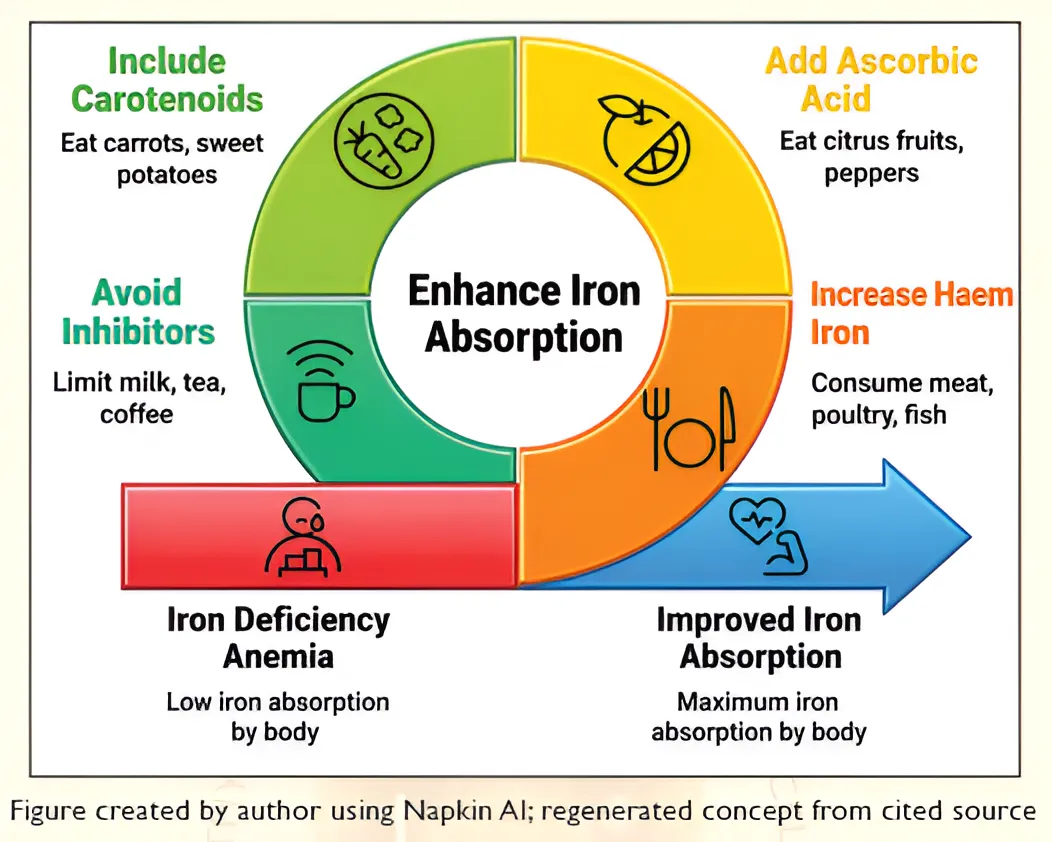
Carotenoids (provitamin A), known for their antioxidant and anti-cancer properties, have also been demonstrated to improve iron absorption, tripling absorption from cereals such as rice-based meals and nearly doubling absorption from wheat- and corn-based meals. Carotenoid-rich foods include carrots, sweet potatoes, squash, spinach, kale and broccoli.
Common Treatment Options
Oral iron supplementation is the first-line treatment for iron deficiency anaemia and is effective at replenishing iron stores and relieving symptoms. However, it frequently causes gastrointestinal side effects, leading to poor compliance.
A recent systemic meta-analysis concluded that iron fortification can improve haemoglobin levels in adolescent girls. The greatest improvement was observed in a study using iron-fortified soy sauce, while the smallest effect was reported with iron-fortified rice; however, most interventions were short-term (12-24 weeks), providing insufficient time to determine sustainability. Nutrition education has also been highlighted as crucial in preventing micronutrient deficiencies in adolescents. Education empowers adolescents with the knowledge and skills needed to make informed food choices, able to prioritise nutrient-rich foods and understand the importance of adequate nutrition for growth and wellbeing. Nutrition education can also address misconceptions and cultural beliefs, reduce reliance on processed and convenience foods, and promote healthier eating behaviours that establish positive dietary patterns into adulthood.
Alternative Dietary Approaches Through Sustainable Eating
Despite extensive public health strategies, progress in reducing anaemia prevalence, particularly among women of reproductive age, remains limited. Sustainable diets promote health and wellbeing with low environmental impact and prioritise affordability, cultural acceptability, and the utilise local, natural resources.
To address anaemia, dietary patterns emphasising nutrient-dense foods and strategies to maximise iron absorption should be considered as sustainable alternatives to supplementation and food fortification. Sustainable diets also align with multiple Sustainable Development Goals (SDGs), including:
SDG 2 (Zero Hunger): improving food security and nutrition
SDG 3 (Good Health): reducing malnutrition and disease
SDG 12 (Responsible Consumption): reducing food waste and promoting efficient use of local resources
SDG 13 (Climate Action): lowering carbon footprint and greenhouse gas emissions through the consumption of locally sourced food
Achieving these goals requires strong nutrition education to build sustainable food systems and reduce food waste. The World Health Organisation and Food and Agriculture Organization recommend addressing micronutrient deficiencies through nutrition education, food fortification, supplementation and dietary diversification. Sustainable eating also supports long-term dietary patterns based on health, economic and socio-cultural considerations.
A healthy vegetarian dietary pattern rich in nutrient-dense whole plant foods such as fruit, vegetables, grains, legumes, nuts and seeds provides essential fibre, vitamins, minerals and antioxidants, which can reduce the burden of non-communicable diseases such as cardiovascular disease, cancer and diabetes. Such diets are also socially desirable, environmentally beneficial, supporting sustainable and resilient food systems.
Nutrient Enhancement Through Recipe Adaptation
To support dietary diversification through sustainable eating, recipe adaptation should reflect local dietary patterns and culinary traditions to align with the cultural diet. Kaur et al. reported that iron-rich, plant-based foods that are inexpensive, traditional and locally available are increasingly underutilised due to the rising trend towards consumption of processed and convenient foods. The authors also emphasised that these plant-based foods, once part of a traditional diet, are highly nutritious and offer health benefits beyond reducing anaemia.
Examples of iron-rich plant-based foods include cereals and millets (such as ragi or finger and bajra or pearl millet and buckwheat), pulses (such as chickpeas, lentils and soybeans), dark leafy greens (such as beet greens, broccoli, kale, moringa and amaranth leaves and spinach), dried fruits (such as apricots, dates, figs and raisins), and various nuts and oilseeds (such as almonds, cashews, hemp, flaxseed, Niger seeds, pine nuts, pistachios, pumpkin seeds, and sesame seeds).
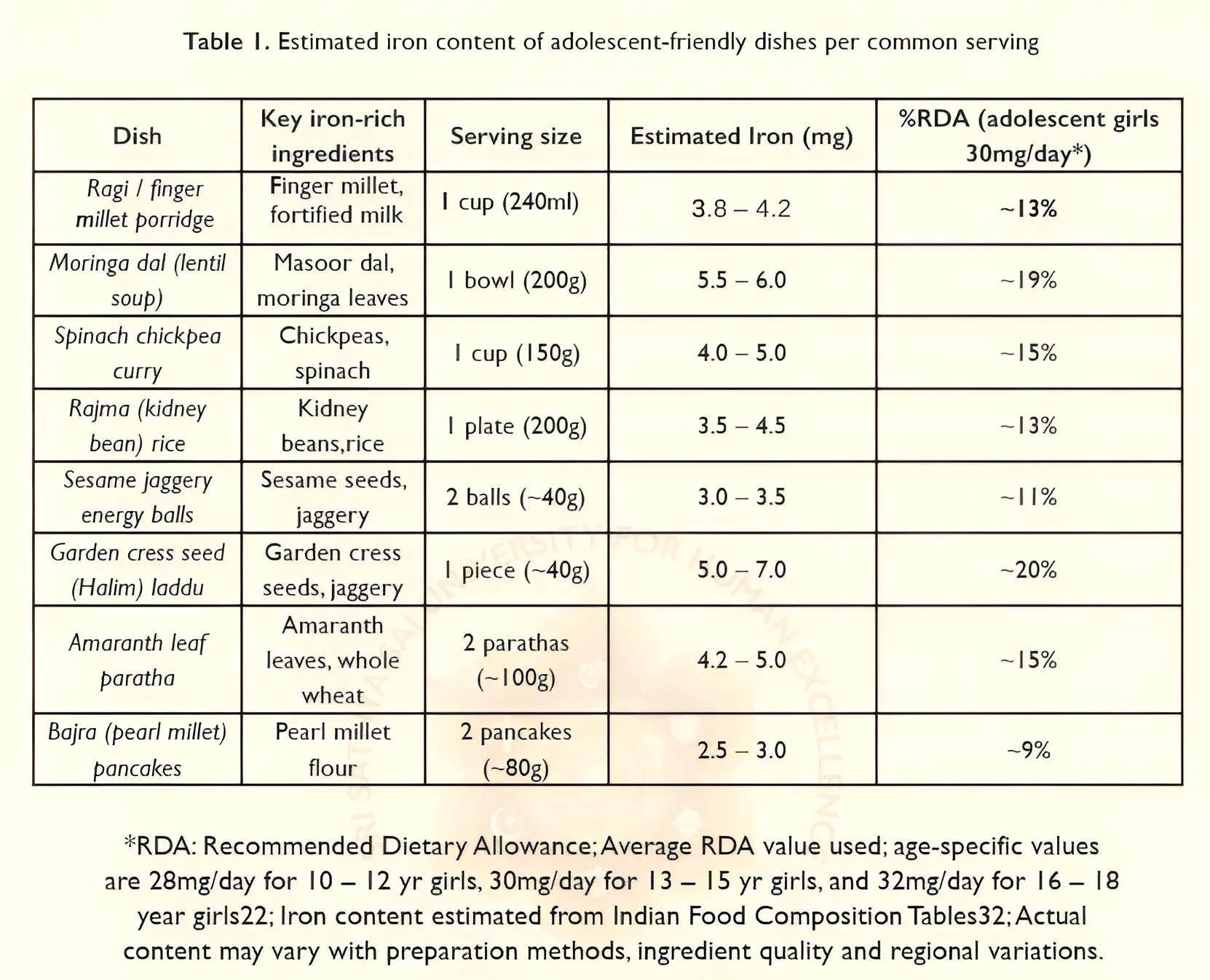
Achieving measurable improvements in haemoglobin levels and iron stores necessitates consistent, long-term adherence to dietary modifications. The recommended intake of 28 - 32 mg/day for adolescent girls is nutritionally demanding and cannot be achieved without deliberate and consistent meal planning. Every meal must be strategically planned to maximise both iron content and bioavailability. Consuming at least three to four iron-rich meals and snacks is therefore necessary but not sufficient. Each meal must also incorporate enhancers such as vitamin C-rich accompaniments, including fruit juice, sliced tomato or a squeeze of lemon juice, which can increase non-haem iron absorption by two to threefold.
Concurrently, known absorption inhibitors such as tea, coffee and excessive calcium intake should be avoided during and immediately following iron-rich meals. Every meal is therefore critical, as systematically maximizing bioavailability across all daily eating occasions yields a cumulative effect that ensures the long-term efficacy needed to achieve recommended nutrient benchmarks. Whilst iron supplementation can produce measurable haemoglobin responses within two to three months, food-based interventions typically require a minimum of three to six months of consistent adherence to observe meaningful haemoglobin improvements, with serum ferritin stores requiring six to twelve months to rebuild adequately. To accurately monitor the efficacy of these interventions, a combination of haemoglobin and serum ferritin should be used, as this dual approach provides the highest sensitivity for tracking the recovery of functional iron and
cellular stores. Ultimately, sustaining these dietary habits into long-term lifestyle patterns beyond 12 months is essential to maintain iron balance and prevent regression of iron stores over time.
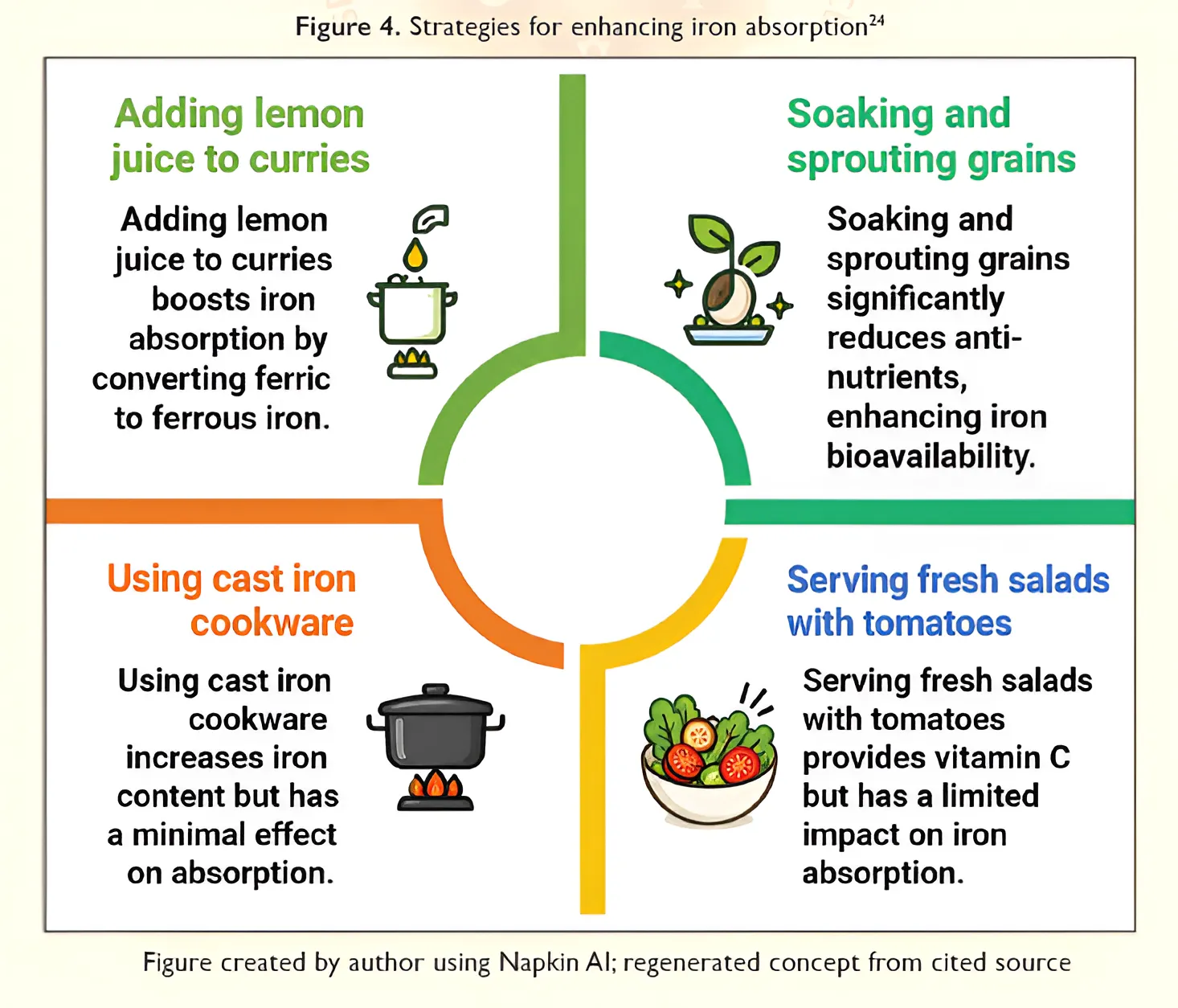
Vitamin C enhances non-haem iron absorption by converting iron from ferric (Fe³⁺) to ferrous (Fe²⁺) iron, forming a soluble chelate in the duodenum that counteracts inhibitors such as tea and calcium. This enhancing effect is dose-dependent and is most effective when vitamin C is consumed simultaneously with iron-rich foods. Therefore, incorporating vitamin C-rich foods such as citrus fruits (lemons and oranges), tomatoes, and bell peppers into iron-containing meals can significantly improve dietary iron bioavailability. Practical recipe adaptations to enhance iron absorption include adding fresh lemon juice to curries and serving iron-rich meals with salads containing leafy greens and tomatoes, complemented by a squeeze of lemon juice, a citrus-based dressing, or vitamin C-rich chutneys. Additionally, fresh fruits or freshly prepared fruit juices, such as papaya, mango, and oranges, can be consumed alongside meals to enhance non-haem iron absorption. Likewise, incorporating vitamin A-rich foods such as carrots and sweet potatoes into everyday recipes may further improve iron bioavailability. These nutrient-dense foods also serve as convenient and healthy snack options for adolescents.
Traditional food preparation methods such as soaking, sprouting, germination, fermentation and cooking can reduce antinutrients (such as phytate), increasing mineral bioavailability. For example, soaking and germinating garden cress, wheat and finger millets significantly reduces phytic acid content. Cooking with iron cookware, such as cast iron and ingots, can also increase iron content by leaching iron into food, increasing the iron content of foods by at least 16%.
Although improving dietary diversity and quality is essential for anaemia prevention, cost and limited access to iron-rich foods such as animal protein, fruit, and vegetables remain major barriers. While dietary diversification offers a sustainable long-term solution, the behavioural changes required may take time. In contrast, supplementation and food fortification can have a more immediate impact on iron status. However, adherence to iron supplementation is often low among adolescent girls due to factors such as personal attitudes and social factors, including a lack of family and peer support.
Conclusion
Anaemia continues to pose significant public health implications due to its complex and multifactorial nature. Adolescents, particularly females, are at increased risk due to dietary limitations, physiological iron requirements, and the onset of menarche. Previous strategies have provided some benefits; however, they have not adequately addressed the wider determinants of dietary behaviour and nutrient intake to prevent anaemia. Beyond iron, this review highlights vitamin B12 and folate deficiency as clinically significant contributors to anaemia, particularly among vegetarian adolescents. Dairy foods, B12-fortified products, and folate-rich plant foods should be incorporated into dietary strategies to ensure a holistic micronutrient approach to preventing anaemia.
A sustainable dietary approach complements existing interventions by focusing on recipe adaptation, which uses traditional preparation techniques to enhance nutrient absorption, and by prioritising nutrient-rich plant foods that are readily available and affordable. Achieving measurable improvements in iron status requires consuming at least three to four iron-rich meals daily, along with vitamin C enhancers, with consistent adherence for a minimum of three to six months and sustained beyond 12 months to prevent regression of iron stores. Sustainable food practices also align with global developmental priorities, including environmental sustainability and food security.
This study introduces a novel perspective by shifting the focus from traditional clinical interventions (such as supplementation and food fortification, where adherence is poor) to sustainable dietary strategies to prevent and manage iron deficiency anaemia among adolescents. The study highlights the potential to increase iron intake through culturally relevant recipe adaptation, traditional food processing techniques and increased use of locally available, nutrient-dense plant foods. It offers a long-term, food-based solution that supports environmental goals and sustainability principles while addressing anaemia by integrating nutrition science to enhance iron bioavailability. Therefore, the study bridges a significant research gap by combining public health nutrition with sustainable food systems to improve adolescent health and well-being.
Future research and policy initiatives should consider how sustainable eating models could contribute to improved health outcomes, especially for adolescents who represent the future adult population and workforce. The findings highlight the need to encourage dietary diversity, enhance nutrient bioavailability and recognise determinants of food choices as key elements in managing and preventing anaemia. Specific implications include nutrition programmes that incorporate dietary diversification and bioavailability-enhancing practices for anaemia prevention; policies that prioritise nutrition education for adolescents and caregivers, particularly on recipe adaptation, preparation, and the roles of enhancers and inhibitors in iron absorption; and the importance of vitamin B12 and folate sufficiency for comprehensive anaemia prevention. Schools should serve
as key platforms for implementing nutrition programmes and education. Government sectors of health, agriculture, education and environment should collaborate to link nutrition outcomes with sustainability goals (SDGs 2, 3, 12 and 13).
Author Contributions: The authors' contributions were as follows: conceptualisation, R.U.; original draft preparation, R.U. and W.S.K.; review & editing, R.U. and W.S.K.
Funding: This research received no external funding.
Institutional Review Board Statement: The study did not require ethical approval.
Acknowledgements: The authors extend their sincere gratitude to Sadguru Sri Madhusudan Sai, Chancellor of Sri Sathya Sai University for Human Excellence (SSSUHE), and Bhagavan Sri Sathya Sai Baba for the guidance and inspiration. W.S.K. wishes to express heartfelt gratitude to Dr Rajeshwari Ullagaddi, co-author and guide, whose tireless encouragement, scholarly guidance and unwavering support were instrumental in the conception, development and completion of this manuscript. W.S.K. also wishes to express sincere appreciation to the community at Jethavanarama Buddhist Monastery in Sri Lanka for their blessings and support throughout this work.
Conflicts of Interest: None.
References
-
Helmyati, S.; Lusmilasari, L.; Sandhi, A.; Hardiyanti, M.; Rosilia, G.; Rachmawati, Y.N.; Aristyarini, M. Systematic Review on Supplementation, Fortification, and Food-Based Interventions for Preventing Iron Deficiency Anaemia in Low- and Middle-Income Countries. Asia Pac J Clin Nutr 2025, 34, 10-35, doi:10.6133/apjcn.202502_34(1).0002.
-
Chaparro, C.M.; Suchdev, P.S. Anemia Epidemiology, Pathophysiology, and Etiology in Low- and Middle-Income Countries. Ann N Y Acad Sci 2019, 1450, 15-31, doi:10.1111/nyas.14092.
-
Gardner, W.M.; Razo, C.; McHugh, T.A.; Hagins, H.; Vilchis-Tella, V.M.; Hennessy, C.; Taylor, H.J.; Perumal, N.; Fuller, K.; Cercy, K.M.; et al. Prevalence, Years Lived with Disability, and Trends in Anaemia Burden by Severity and Cause, 1990-2021: Findings from the Global Burden of Disease Study 2021. Lancet Haematol 2023, 10, e713-e734, doi:10.1016/S2352-3026(23)00160-6.
-
Lopez, A.; Cacoub, P.; Macdougall, I.C.; Peyrin-Biroulet, L. Iron Deficiency Anaemia. Lancet 2016, 387, 907-916, doi:10.1016/S0140-6736(15)60865-0.
-
World Health Organization. WHO global anaemia estimates: key findings, 2025 [Internet]. Geneva: World Health Organization; 2025 [cited 2025 Dec 22]. Available from: https://www.who.int/publications/i/item/9789240113930.
-
Benson, C.S.; Shah, A.; Stanworth, S.J.; Frise, C.J.; Spiby, H.; Lax, S.J.; Murray, J.; Klein, A.A. The Effect of Iron Deficiency and Anaemia on Women's Health. Anaesthesia 2021, 76 Suppl 4, 84-95, doi:10.1111/anae.15405.
-
Clark, S.F. Iron Deficiency Anemia. Nutr Clin Pract 2008, 23, 128-141, doi:10.1177/0884533608134536.
-
Smith, R.E. The Clinical and Economic Burden of Anemia. Am J Manag Care 2010, 16 Suppl Issues, S59-66.
-
Obeagu, G.U.; Obeagu, E.I. Complications of Anemia in Pregnancy: An Updated Overview for Healthcare Professionals. Medicine (Baltimore) 2025, 104, e44246, doi:10.1097/MD.00000000000044246.
-
Green, R. Nutritional Anaemia. In: Laboratory haematology practice, 1st ed.; K. Kottke-Marchant, B.H. Davis, Eds.; Wiley-Blackwell: Oxford, UK, 2012, pp. 583-594.
-
Tesfaye, M.; Yemane, T.; Adisu, W.; Asres, Y.; Gedehaw, L. Anemia and Iron Deficiency among School Adolescents: Burden, Severity, and Determinant Factors in Southwest Ethiopia. Adolesc Health Med Ther 2015, 6, 189-196, doi:10.2147/AHMT.S94865.
-
Wiafe, M.A.; Ayenu, J.; Eli-Cophie, D. A Review of the Risk Factors for Iron Deficiency Anaemia among Adolescents in Developing Countries. Anemia 2023, 2023, 1-11, doi:10.1155/2023/6406286.
-
Anwar, S.; Rauf, M.K.; Farooq, M.; Khan, M.; Maqsood, W.; Gulraiz, S. Iron Deficiency Anemia in Teenage Girls: The Impact of Menarche and Nutritional Care. Cureus 2025, 17, e84997, doi:10.7759/cureus.84997.
-
Kavthekar, D.S.; Kulkarni, D.D.; Kurane, D.A.; Chougule, D.A. Association of BMI, Socioeconomic Status and Menarche Age with Anemia in Rural School Going Adolescent Girls. Pediatr Rev: Int J Pediatr Res 2016, 3, 486-492, doi:10.17511/ijpr.2016.i07.04.
-
Chung, A.; Vieira, D.; Donley, T.; Tan, N.; Jean-Louis, G.; Kiely Gouley, K.; Seixas, A. Adolescent Peer Influence on Eating Behaviors via Social Media: Scoping Review. J Med Internet Res 2021, 23, e19697, doi:10.2196/19697.
-
Obeagu, E. A Review on Nutritional Anaemia. Int J Adv Multidiscipl Res 2018, 5, 11-15, doi:10.22192/ijamr.2018.05.04.003.
-
Bhadra, P.; Deb, A.A. Review on Nutritional Anemia. IJONS 2020, 10, 18674-18681.
-
Soni, R.; Verma, D.; Chopra, R.; Singh, V.; Goswami, D. Demystifying Intricate Factors of Nutritional Anemia beyond Iron Deficiency- A Narrative Review. Clin Nutr ESPEN 2025, 69, 745-764, doi:10.1016/j.clnesp.2025.08.034.
-
Malik, Z.I.; Ghafoor, M.U.; Shah, S.; Abid, J.; Farooq, U.; Ahmad, A.M. Unlocking Iron: Nutritional Origins, Metabolic Pathways, and Systemic Significance. Front in Nutr 2025, 12.
-
Refsum, H.; Yajnik, C.S.; Gadkari, M.; Schneede, J.; Vollset, S.E.; Orning, L.; Guttormsen, A.B.; Joglekar, A.; Sayyad, M.G.; Ulvik, A.; et al. Hyperhomocysteinemia and Elevated Methylmalonic Acid Indicate a High Prevalence of Cobalamin Deficiency in Asian Indians. Am J Clin Nutr 2001, 74, 233-241, doi:10.1093/ajcn/74.2.233.
-
Pawlak, R.; Lester, S.E.; Babatunde, T. The Prevalence of Cobalamin Deficiency among Vegetarians Assessed by Serum Vitamin B12: A Review of Literature. Eur J Clin Nutr 2014, 68, 541-548, doi:10.1038/ejcn.2014.46.
-
ICMR-NIN. Revised Short Summary Report-2024: Recommended Dietary Allowances (RDA) and Estimated Average Requirements (EAR)-2020; ICMR-National Institute of Nutrition: Hyderabad, India, 2024. Available online: https://www.nin.res.in/RDA_short_Report_2024.html (accessed on 31 May 2026)
-
Bailey, R.L.; West, K.P.; Black, R.E. The Epidemiology of Global Micronutrient Deficiencies. Ann Nutr Metab 2015, 66 Suppl 2, 22-33, doi:10.1159/000371618.
-
Piskin, E.; Cianciosi, D.; Gulec, S.; Tomas, M.; Capanoglu, E. Iron Absorption: Factors, Limitations, and Improvement Methods. ACS Omega 2022, 7, 20441-20456, doi:10.1021/acsomega.2c01833.
-
García-Casal, M.N. Carotenoids Increase Iron Absorption from Cereal-Based Food in the Human. Nut Res 2006, 26, 340-344, doi:10.1016/j.nutres.2006.06.015.
-
García-Casal, M.N.; Layrisse, M.; Solano, L.; Barón, M.A.; Arguello, F.; Llovera, D.; Ramírez, J.; Leets, I.; Tropper, E. Vitamin A and Beta-Carotene Can Improve Nonheme Iron Absorption from Rice, Wheat and Corn by Humans. J Nutr 1998, 128, 646-650, doi:10.1093/jn/128.3.646.
-
Karomah, U.; Dewi, N.M.P.K.; Putri, L.P. Effectiveness of Food Fortification to Anemia in Adolescents: A Systematic Review and Meta-Analysis. Amerta Nutrition 2024, 8, 466-477, doi:10.20473/amnt.v8i3SP.2024.466-477.
-
Wiafe, M.A.; Apprey, C.; Annan, R.A. Nutrition Education Improves Knowledge of Iron and Iron-Rich Food Intake Practices among Young Adolescents: A Nonrandomized Controlled Trial. Int J Food Sci 2023, 2023, 1804763, doi:10.1155/2023/1804763.
-
Principato, L.; Pice, G.; Pezzi, A. Understanding Food Choices in Sustainable Healthy Diets - A Systematic Literature Review on Behavioral Drivers and Barriers. Environ Sci Policy 2025, 163, 103975, doi:10.1016/j.envsci.2024.103975.
-
Kaur, N.; Agarwal, A.; Sabharwal, M. Food Fortification Strategies to Deliver Nutrients for the Management of Iron Deficiency Anaemia. Curr Res Food Sci 2022, 5, 2094-2107, doi:10.1016/j.crfs.2022.10.020.
-
Kaur, N.; Thuanthong, A.; Kaur, S.; Agarwal, A.; Sabharwal, M.; Sahu, J.; Arcot, J.; Tripathi, A.; Koirala, P.; Nirmal, N. Combat the Growing Prevalence of Anaemia through Underutilised Iron-Rich Plant-Based Foods. J Agric Food Res 2025, 19, 101688, doi:10.1016/j.jafr.2025.101688.
-
Longvah, T.; Ananthan, R.; Bhaskarachary, K.; Venkaiah, K. Indian Food Composition Tables; National Institution of Nutrition, Indian Council of Medical Research: Hyderabad, India, 2017.
-
Lynch, S.R.; Cook, J.D. Interaction of Vitamin C and Iron. Ann N Y Acad Sci 1980, 355, 32-44, doi:10.1111/j.1749-6632.1980.tb21325.x.
-
Das, G.; Sharma, A.; Sarkar, P.K. Conventional and Emerging Processing Techniques for the Post-Harvest Reduction of Antinutrients in Edible Legumes. Appl Food Res 2022, 2, 100112, doi:10.1016/j.afres.2022.100112.
-
Patel, S.; Dutta, S. Effect of Soaking and Germination on Anti-Nutritional Factors of Garden Cress, Wheat and Finger Millet. Int J Pure Appl Biosci 2018, 6, 1076-1081, doi:10.18782/2320-7051.7006.
-
Kulkarni, S.A.; Ekbote, V.H.; Sonawane, A.; Jeyakumar, A.; Chiplonkar, S.A.; Khadilkar, A.V. Beneficial Effect of Iron Pot Cooking on Iron Status. Indian J Pediatr 2013, 80, 985-989, doi:10.1007/s12098-013-1066-z.
-
Alves, C.; Saleh, A.; Alaofe, H. Iron-Containing Cookware for the Reduction of Iron Deficiency Anemia among Children and Females of Reproductive Age in Low-and Middle-Income Countries: A Systematic Review. PLoS One 2019, 14, e0221094, doi:10.1371/journal.pone.0221094.
-
Silitonga, H.; Salim, L.; Nurmala, I.; Wartinningsih, M. Compliance of Iron Supplementation and Determinants among Adolescent Girls: A Systematic Review. Iran J Public Health 2023, 52, doi:10.18502/ijph.v52i1.11664.
Disclaimer/Publisher's Note: The statements, opinions and data contained in all publications are solely those of the individual author(s) and contributor(s) and not of SSSUHE and/or the editor(s). SSSUHE and/or the editor(s) disclaim responsibility for any injury to people or property resulting from any ideas, methods, instructions, or products referred to in the content.