In Vitro Propagation Strategy for Croton bonplandianus through Internodal Segments
- Aug 11, 2026
- 82 views
Abstract
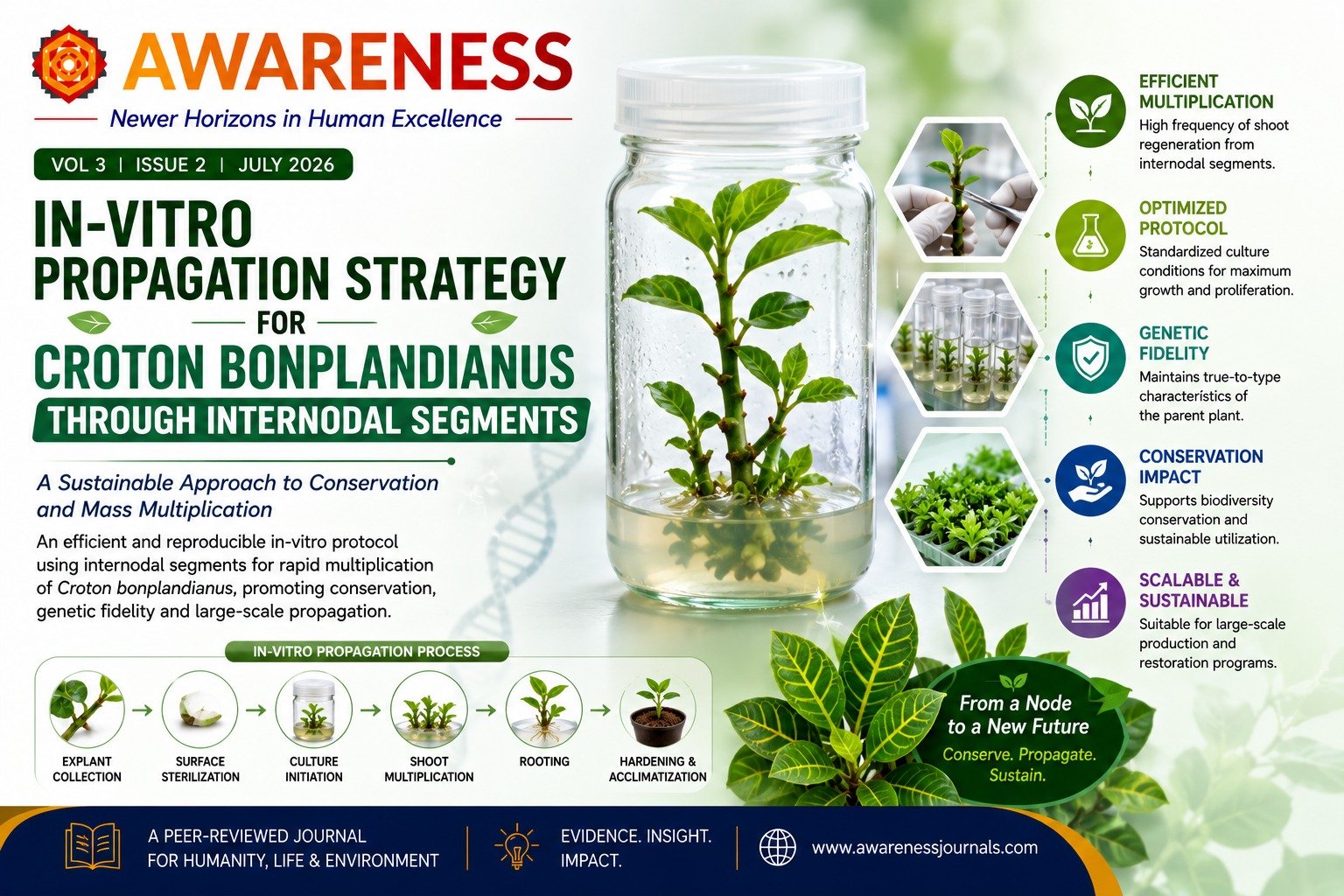
Croton bonplandianus is an important medicinal herb and has been used to prepare herbal formulations to cure many diseases. Its potential to heal wounds can be exploited as an effective formulation in medicines. In vitro-raised plantlets provide a suitable alternative to mass multiplication and cell culture-based metabolite production. It is an effective strategy for the conservation of plants in their natural and native habitats. An efficient protocol for in vitro shoot multiplication of Croton bonplandianus has been developed using internodal segments as explants. It was observed that shoot multiplication could be induced on a slightly modified Murashige and Skoog’s (MS) medium supplemented with 6-benzylaminopurine, Naphthalene Acetic Acid, Indole 3-Acetic Acid, in various combinations. Shoot proliferation and root induction were induced with an enhanced number of plantlets, and optimization was successfully done to obtain viable and healthy plantlets with a success rate of more than 82%. The optimized protocol can be used to optimize cell suspension cultures.
Full Text
Introduction
Medicinal plants are known to possess active ingredients that are significantly used in different medicinal formulations. Such formulations have been used from ancient times as mentioned in Ayurveda and Yunani literature. The significance of medicinal properties of plants have been reported in the literature and writings of Charaka, Shushrutha, and many other sages. The extracts of plants, decoction, or tincture have been used to treat different disorders and diseases. India is rich in biodiversity hotspots for medicinal plants. Karnataka is one of those hotspots of biodiversity. The Panchagiri hills are known for many endemic and valuable flora, but extensive studies are needed to record and document the diversity. Panchagiri is a collective name for a place surrounded by five hills named Nandi Giri, Skanda Giri, Chandra Giri, Brahma Giri, and Hema Giri.
Croton bonplandianus is a large flowering shrub that grows along the hilly and plains areas of the Panchagiri hills. It belongs to the family Euphorbiaceae. The plant is an annual/perennial herbaceous plant with a height of 80-100cm with a multiple-branched system. Stem is erect (covered with fine hairs); leaves are simple and in an alternate arrangement, ovate to lanceolate with serrated margins; flowers: small, unisexual, and arranged in terminal/axillary racemes. Fruits are three-lobed capsules with flattened and oval seeds. The plants are mostly observed in the disturbed and dry regions with less fertile soils. It is known for its anticancer, antioxidant, and antimicrobial properties. The previous studies show that this can also act as an anaesthetic agent in relieving stomach and oesophagus-related issues, and it can also help reduce the over-secretion of the stomach. The plant is also found to have wound-healing active ingredients in it. To conserve this plant and to propagate it with ease, a few techniques are used, and in vitro propagation is one of them.
In vitro propagation is growing genetically identical copies by asexual reproduction. It involves the aseptic culture of explants of tissues and organs using a defined culture medium in a sterile and controlled environment. In vitro propagation of Croton bonplandianus plant is significant because a large number of plants can be grown in a lab under controlled conditions. In recent times, the technique has been widely used to study plants and their significance. Since the Croton plant is proven to possess a wide range of pharmaceutical properties, to study them larger number of plants are required at the lab. This technique can aid in supplying the plants for the study. The objective of the study was to establish the optimised protocol for the micropropagation of this plant with various combinations of plant growth regulators.
Materials and Methods
Plant collection and identification
Young and healthy plants of Croton bonplandianus were collected from Panchagiri hills, Muddenahalli, Karnataka, India. The plant species was identified with the help of available literature and the Botanical Survey of India, Coimbatore Circle, Tamil Nadu (Certificate no. BSI/SRC/5/23/2024-25/Tech/6/2).
Sterilization & Culture inoculation
Internodal segments from young & healthy plants were selected as explants for the initiation of cultures in vitro. The whole procedure was conducted in a laminar hood under strict aseptic conditions. The laminar hood's floor was sanitized with 70% alcohol. The explants were washed 5-6 times thoroughly under running tap water to remove all the dirt, then exposed to 90% ethyl alcohol for 10 seconds for surface sterilization and rinsed with sterile double-distilled water. Afterwards, the explants were placed in a beaker containing water and 3-4 drops of Tween 20 (detergent). Stirred the beaker gently for 7 minutes and washed under running tap water (6 times), followed by double-distilled water (×5). After removal of all traces of detergent, surface disinfection was carried out with 0.01 - 0.1% HgCl2 (w/v), followed by washing several times (10 times) with sterilized distilled water. The plant material was allowed to dry in a laminar hood on a tissue paper towel (soaked in
Alcohol and dried) for 20 minutes to evaporate any excess water present on the surface of the explant. Since the cells in the stem that retain totipotency are mainly the parenchymatous cells of the cortex and pith, along with some vascular parenchyma associated with xylem and phloem, the internodal segments were used as explants. The internodal segments were infused onto Murashige and Skoog's (MS) medium under aseptic conditions. The medium was supplemented with usual salts and vitamins and 3% sucrose (w/v; Hi-Media), 100 mg/litre myo-inositol (E. Merck) and 0.8% agar (w/v; Hi-Media).
MS media were used for in vitro mass propagation of Croton bonplandianus. The media included all the macronutrients as well as micronutrients, along with the organic supplements as vitamins and organic acids. Different plant growth regulators were standardized for their optimum concentrations for organogenesis. All media components were purchased from HiMedia and were of molecular biology grade. Growing calli were subcultured on media supplemented with BAP and IAA for organogenesis, especially for further shoot multiplication. Shoot Proliferation rate was measured by counting the total number of shoots produced per explant across replicates (n = 3), and the values were presented as mean ± SE. The bud induction rate (%) was measured after 6 weeks by counting the percentage of explants showing bud induction with respect to total explants cultured. Roots were then induced in MS medium supplemented with different combinations of IAA and NAA. 5-week-old plantlets were transferred to pots containing a sterilized soil and sand mix (1:1), covered with polythene bags with perforations, for 10 days and the pots were kept below 25±2°C for acclimatization and hardening.
Acclimatization
Plantlets with viable and thick roots were safely taken out of the culture medium. The roots were carefully washed to get rid of the media components and agar. Then they were grown in Knop's mineral solution for 48 hours, and later they were transplanted to fresh plastic pots containing sterilized soil mixed (garden soil and sand simultaneously) with peat moss in a 1:1 ratio. The plantlets were kept in a culture room at 25±2°C for 5-7 days, and the plantlets were transferred to earthen pots (10 cm in diameter with natural soil), and maintained under shade for 2 more weeks. Then the pots were slowly exposed to the sun outdoors. Viability % was counted to analyze the efficacy of optimization experiments.
Statistical Analysis of the Data
The data were statistically analysed using SPSS software tool (version 11.5; SPSS, Chicago, IL, USA). A one-way ANOVA, followed by Bonferroni's post hoc analysis, was conducted to determine the statistical significance. A two-sample t-test was performed to determine the statistically significant difference in the total protein, proline, flavonoid, ascorbate and thiol content between the wild and in vitro-propagated plants. Differences were considered significant at P < 0.05.
Results
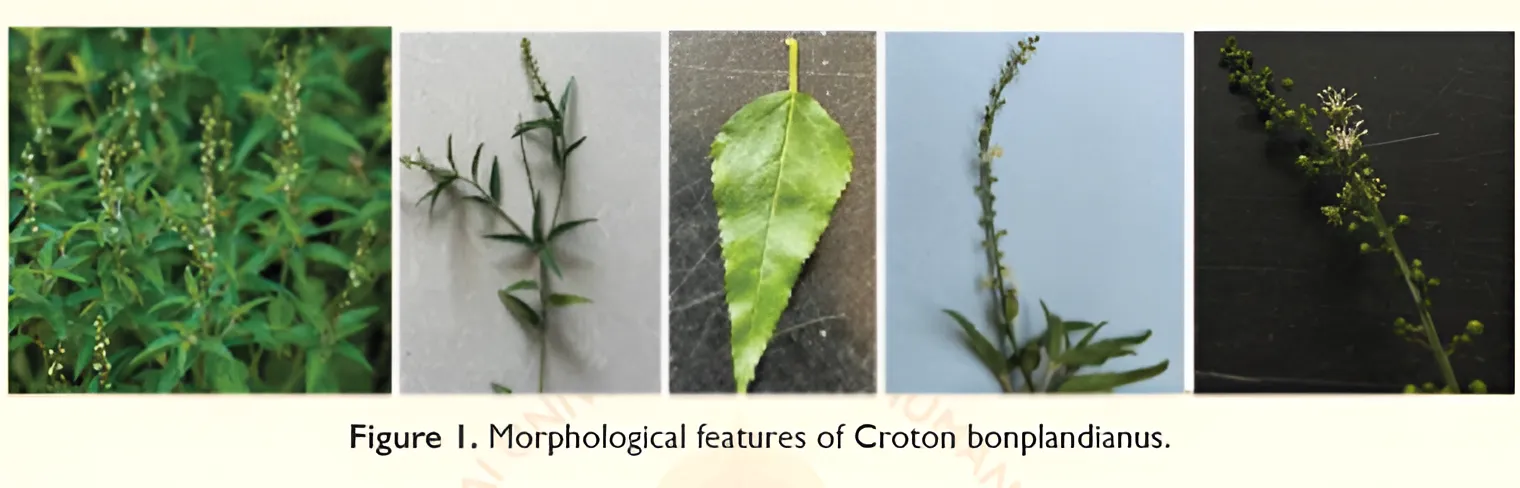
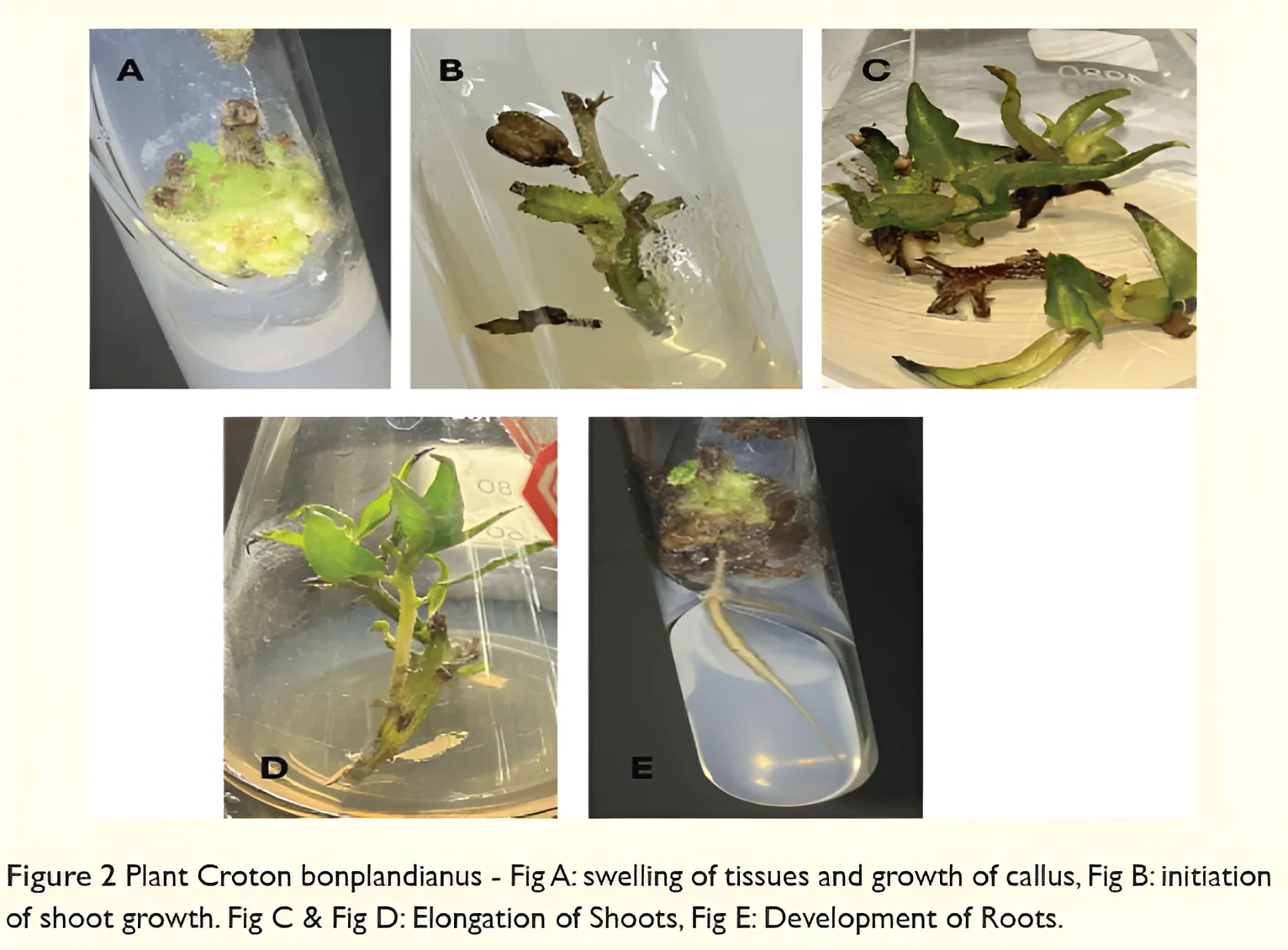
Croton bonplandianus plants were observed to be herbaceous in nature with an average height of 80-100 cm. Stems were observed to be erect (covered with fine hairs), multi-branched; leaves as simple and in alternate arrangement. It was identified that the leaves had serrated edges and were ovate to lanceolate in shape. The flowers were small, unisexual, and arranged in terminal/axillary racemes. Fruits were three-lobed capsules with flattened and oval seeds.
Shoot Proliferation and Bud Induction
The effect of varying concentrations of BAP and NAA on shoot proliferation and bud induction in Croton explants was evaluated. The control treatment (0 mg/L BAP and NAA) yielded a mean shoot proliferation coefficient of 1.87 and an induction rate of 7%. Supplementation with 0.4 mg/L BAP and 0.02 mg/L NAA significantly increased shoot proliferation (mean: 2.4) and induction rate (40%). Further enhancement was observed with 0.6 mg/L BAP and 0.04 mg/L NAA, resulting in a mean proliferation of 4.07 and 60% induction. The highest shoot proliferation (mean: 7.57) and induction rate (84%) were recorded at 0.8 mg/L BAP and 0.06 mg/L NAA.
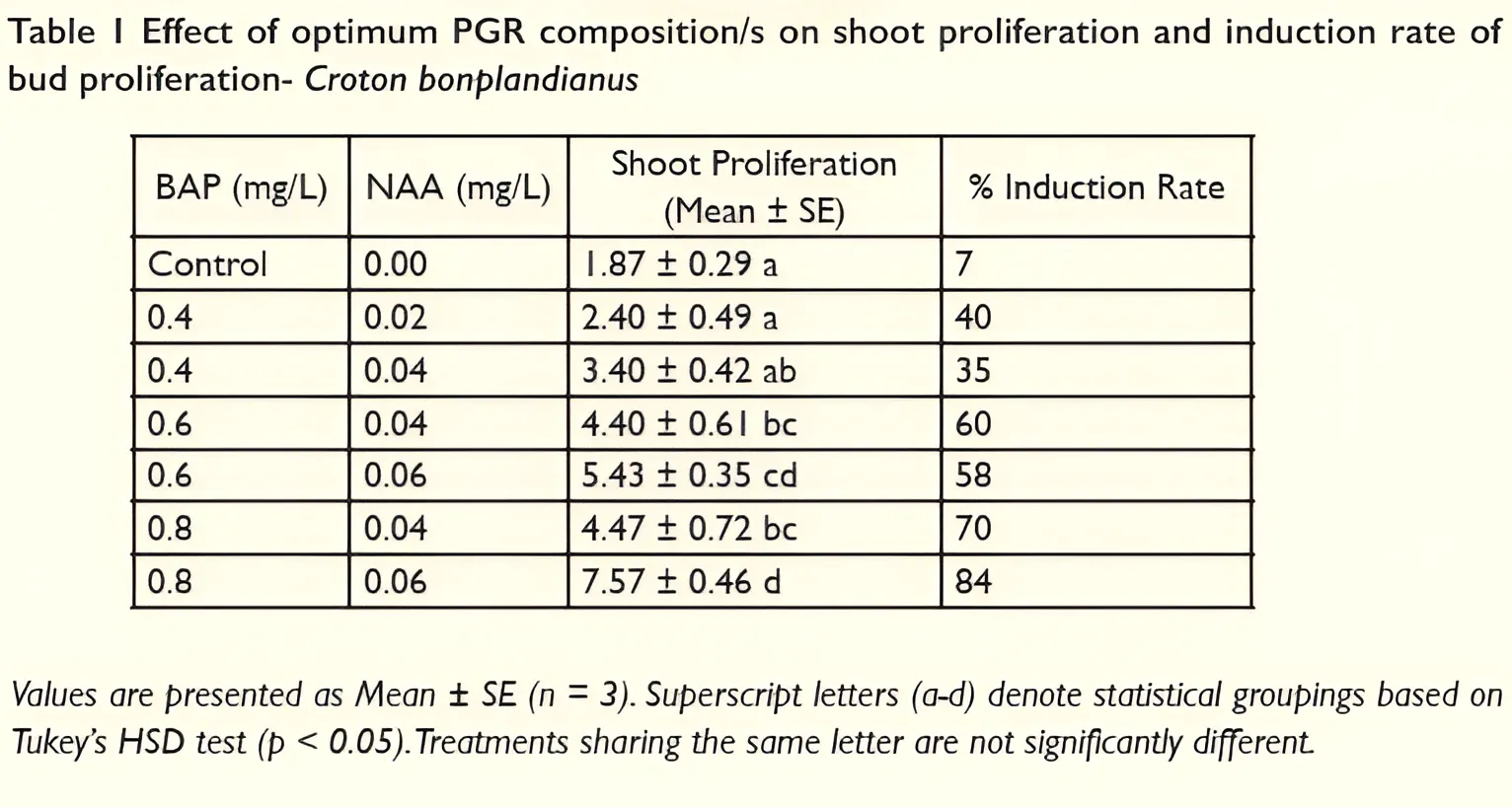
Among the tested combinations, 0.8 mg/L BAP with 0.06 mg/L NAA yielded the highest mean shoot proliferation coefficient (7.57 ± 0.80), significantly outperforming the control (1.87 ± 0.50) and other treatments (p < 0.001, Tukey HSD). These findings align with previous reports in Croton species and other Euphorbiaceae members, where BAP has been shown to stimulate axillary bud break and shoot multiplication. The observed increase in shoot proliferation may be attributed to BAP's role in promoting cell division and meristematic activity, while NAA modulates tissue polarity and vascular differentiation.
Levene's test confirmed homogeneity of variances (F = 0.538, p = 0.771), validating the assumptions for ANOVA and post hoc comparisons. The significant mean differences between control and high-performing treatments (e.g., I vs. Control: mean diff = 5.7, p < 0.001) reinforced the biological relevance of the statistical findings. These results are consistent with studies in Jatropha curcas and Ricinus communis, where similar hormonal regimes yielded optimal shoot regeneration.
Root Initiation and Induction Rate
Rooting responses varied significantly across treatments with different concentrations of IBA and NAA. The control group (0 mg/L IBA and NAA) showed no root formation. Introduction of 0.02 mg/L NAA alone resulted in 20% induction with 2-3 roots per plantlet. Combined treatments of 0.02 mg/L NAA and 0.06 mg/L IBA yielded the highest root induction rate of 82%, with an average of 8-9 roots per plantlet.
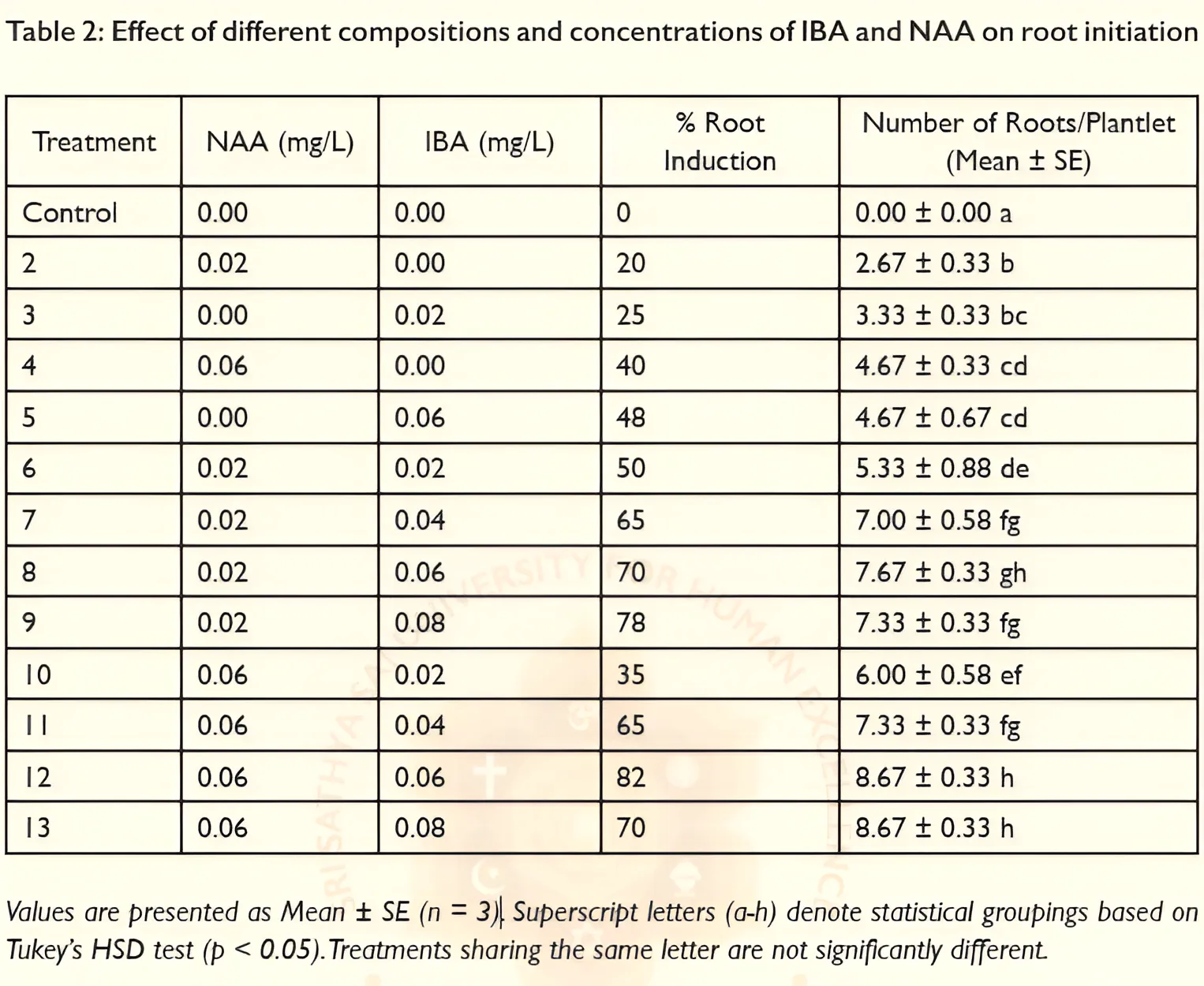
Treatments with 0.06 mg/L NAA and 0.08 mg/L IBA also showed strong rooting (70% induction, 8-9 roots), confirming the efficacy of auxin combinations in promoting rhizogenesis. The present study elucidated the significant impact of auxin combinations specifically IBA and NAA on root initiation in Croton bonplandianus, supported by rigorous statistical validation. The ANOVA results revealed a highly significant treatment effect (F = 30.46, p < 0.001), with a large effect size (η2 = 0.934; ω2 = 0.901), indicating that over 90% of the variance in root number was attributable to the treatment conditions. This underscored the potent influence of auxin concentration and composition on rhizogenic response. These findings are consistent with previous reports where IBA was shown to enhance root primordia formation and elongation in woody and medicinal plants. Post hoc comparisons revealed statistically significant differences between the control and all auxin-supplemented treatments with large Cohen's d values indicating strong practical significance. The synergistic effect of NAA and IBA likely stems from their complementary roles - NAA promoting cell division and IBA facilitating root elongation and vascular differentiation. Similar synergism has been reported in Azadirachta indica and Jatropha curcas, where combined auxin treatments yielded superior rooting outcomes. These results provided a reproducible framework for optimizing root induction protocols in C. bonplandianus, a species of ecological and pharmacological interest due to its allelopathic and antimicrobial properties.
Substrate Effects on Survival and Plant Height
After 60 days of acclimatization, substrate composition significantly influenced both survival percentage and plant height. The mixed substrate of sand: vermicompost: garden soil (50:25:25) resulted in the highest survival rates (mean: 82%) and tallest plantlets (mean height: 5.5 - 6.8 cm). Garden soil alone supported moderate survival (mean: 41.7%) and plant height (2.3-3.2 cm), while pure sand yielded the lowest survival (mean: 34.3%) and shortest plantlets (1.6-2.4 cm). These results underscore the importance of substrate composition in post-micropropagation acclimatization.
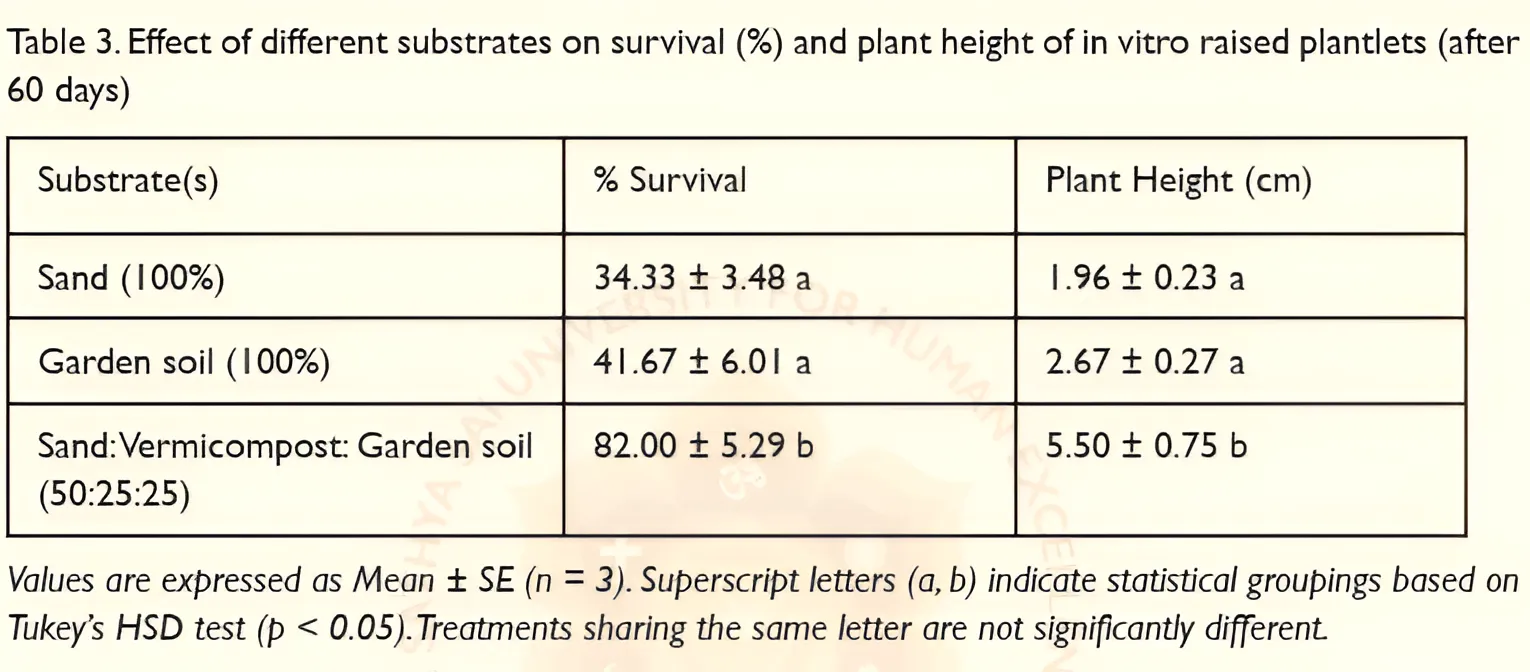
The acclimatization phase is critical in micropropagation, and the present study demonstrates that substrate composition significantly influences survival rates and plantlet vigor in Croton bonplandianus. ANOVA results revealed a highly significant effect of substrate type on survival percentage (F = 25.93, p = 0.001), with a large effect size (η2 = 0.896; ω2 = 0.847), indicating that nearly 90% of the variance in survival was attributable to substrate differences.
Among the tested substrates, the mixture of sand, vermicompost, and garden soil (50:25:25) yielded the highest mean survival rate (82 ± 9.16%), significantly outperforming garden soil (41.67 ± 10.41%) and sand (34.33 ± 6.03%) (p < 0.01, Tukey HSD). The low coefficient of variation (CV = 0.112) in the mixed substrate group underscores its consistency and reliability. These findings are consistent with previous reports where organic amendments such as vermicompost enhanced moisture retention, microbial activity, and nutrient availability, thereby improving plantlet establishment.
Post hoc comparisons confirmed significant mean differences between vermicompost-based substrate and both garden soil (mean diff = 40.33, p = 0.003) and sand (mean diff = 47.67, p = 0.001), with large Cohen's d values (>4.6), indicating strong practical relevance. The improved survival in the mixed substrate may be attributed to its balanced texture and nutrient profile, which supports root aeration and microbial symbiosis factors known to enhance post-transfer acclimatization. These results aligned with studies in Withania somnifera and Azadirachta indica, where substrate optimization was pivotal for successful hardening and field establishment. The statistical evidence strongly supported the use of a sand: vermicompost: garden soil mixture for enhancing the survival and growth of Croton bonplandianus plantlets during acclimatization. This substrate combination offers a reproducible and scalable solution for conservation and commercial propagation efforts. Future work may explore microbial inoculants and nutrient dynamics within this substrate system to further optimize post-micropropagation success.
The integrated statistical analyses across shoot proliferation, root initiation, and acclimatization parameters in Croton bonplandianus revealed a coherent and reproducible micropropagation strategy. Optimized concentrations of BAP (0.8 mg/L) and NAA (0.06 mg/L) significantly enhanced shoot multiplication, aligning with prior findings in Euphorbiaceae. The current work provides preliminary information and methodology for the rapid propagation of this valuable plant from internodal explants that might help in the improvement of conservation methods. It is a high-value medicinal plant, and its mass propagation strategy can be used further in suspension cultures to obtain suitable secondary metabolites for commercial uses in antioxidant, antimicrobial, anticancer, and other activities. The researchers may focus on methodological improvements in cell culture-based metabolite production. The use of elicitors in cell suspension cultures might be suitable to activate metabolite production in cultures and increase the significance of plant tissue culture technology. It will help to establish a scalable strategy for using different stages of callus for obtaining medicinal compounds from culture media. This approach has been successfully demonstrated previously.
Conclusion
The current study effectively optimized an efficient in vitro propagation technique for Croton bonplandianus using internodal explants. It indicated the capacity of this valuable medicinal plant for rapid clonal multiplication under controlled conditions. The optimized cultures not only promoted regular shoot formation and elongation with higher multiplication rate but it also provided a dependable pathway for generating viable and healthy roots for better acclimation. The sterilized soil mix compositions ensured the recovery of healthy plantlets with very high percentage rate. This technique shows promise for large-scale propagation, conservation, and possible use of Croton bonplandianus in phytochemical and pharmaceutical research, as well as contributing to sustainable management of its wild populations. The callus can be used to generate and establish cell suspension cultures for selective metabolite production. Future research may concentrate on improving secondary metabolite production using suspension cultures using elicitors, expanding the scope of this species in both scientific and commercial sectors.
Author Contributions: Conceptualization - J.S.; S.K.S; Methodology - J.S.; writing- original draft preparation - J.S. and S.K.S; Formal analysis (Application of statistical techniques to analyze the studied data)- R.R.
Acknowledgments: The authors wish to thank Sri Sathya Sai University for Human Excellence, Kalaburagi, Karnataka, for supporting the current piece of research work through the Seed Money Grant.
Declaration of conflicts of Interest: The authors declare no conflict of interest.
References
-
Ali, G.; Hadi, F.; Ali, Z.; Tariq, M.; Ali Khan, M. Callus induction and in vitro complete plant regeneration of different cultivars of tobacco (Nicotiana tabacum L.) on media of different hormonal concentrations. Biotechnol. 2007, 6, 561-566.
-
Chhon, Yanvary, Sorn, Virak, Seab, Phanith, Ung, Sivlin, Kheang, Laiheang, Ly, Viboth, Effect of 6-Benzylaminopurine (6-BAP) on Shoot Proliferation in Micropropagated Cavendish Banana (Musa acuminata), International Journal of Agronomy, 2025, 4870939, 8 pages, 2025. https://doi.org/10.1155/ioa/4870939.
-
Divya, S.; et al. Wound healing and in vitro antioxidant activities of Croton bonplandianum leaf extract in rats. Global J. Pharmacol. 2011, 5, 159-163.
-
George, E.F.; Hall, M.A.; De Klerk, G.-J. Plant propagation by tissue culture, 3rd Edition. Springer, The Netherlands, 2008, 65-175.
-
Gamborg, O.L.; Phillips, G.C. Sterile Techniques. In Plant Cell, Tissue and Organ Culture: Fundamental Methods; Gamborg, O.L., Phillips, G.C., Eds.; Springer-Verlag: Berlin, Heidelberg, New York, 1995; Chapter 3, 35-42.
-
De Klerk, G.-J.; Van Der Krieken, W.; de Jong, J.C. Review: the formation of adventitious roots- new concepts, new possibilities. In Vitro Cell. Dev. Biol.- Plant 1999, 35, 189-199.
-
Ghosh, T.; Biswas, M.K.; Roy, P.A. An evaluation of antibacterial potential of medicinal plant Croton bonplandianum against some pathogen isolated from complicated urinary tract infections (UTI): alternative approaches of conventional treatment. World J. Pharm. Res. 2018, 7, 1323-1342.
-
Goel, N.; Singh, N.; Saini, R. Efficient in vitro multiplication of Syrian Rue (Peganum harmala L.) using 6-benzylaminopurine pre-conditioned seedling explants. Nat. Sci. 2009, 7, 129-134.
-
Goswami, H.; Keng C.L.; Teo, C.K.H. In vitro shoot multiplication of Tectona grandis. J. Biosci. 1999, 10, 47-54.
-
Rout, G.R.; Samantaray, S.; Das, P. In vitro manipulation and propagation of medicinal plants. Biotechnol. Adv. 2000, 18, 91-120.
-
Doyle, J.J.; Doyle, J.L. A rapid DNA isolation procedure for small quantities of fresh leaf tissue. Phytochem. Bull. 1987.
-
Gopinath, K.A.; et al. Utilization of vermicompost as a soil amendment in organic crop production. Dyn. Soil Dyn. Plant 2010, 4, 48-57.
-
Malviya, S.; Rawat, S.; Kharia, A.; Verma, M. Int. J. Pharm. Life Sci. 2011, 2, 830-837.
-
Shanthy, S.; Singh, S.K. Axillary shoot multiplication from nodal explants of Ocimum basilicum L. (Sweet Basil). Proc. Natl. Sci. India 2008, 78, 79-83.
-
Vadlapudi, V.; Naidu, K.C. In vitro antimicrobial screening of selected Indian medicinal plants. 2010.
-
Sahoo, Y.; Chand, P.K. Micropropagation of Vitex negundo L., a woody aromatic medicinal shrub, through high-frequency axillary shoot proliferation. Plant Cell Rep. 1998, 18, 301-307.
-
Golkar, P., Vázquez-Núñez, É. & Peralta-Videa, J. R. (2025). Nano-Elicitation Approaches for Boosting Secondary Metabolites in Medicinal Plant Cell Cultures. Plants, 15(1). https://doi.org/10.3390/plants15010046.
-
Taruni Bajaj, Hina Alim, Ahmad Ali, and Nimisha Patel, "Synthesis of plant secondary metabolites under the influence of elicitors, application in stress management and In vitro techniques to enhance their production," Physiological and Molecular Plant Pathology, 2025, doi: 10.1016/j.pmpp.2025.102905.
Disclaimer/Publisher's Note: The statements, opinions and data contained in all publications are solely those of the individual author(s) and contributor(s) and not of SSSUHE and/or the editor(s). SSSUHE and/or the editor(s) disclaim responsibility for any injury to people or property resulting from any ideas, methods, instructions, or products referred to in the content.