Indian Jews: A Case Study of Unique Religious Tolerance
- Feb 22, 2026
- 495 views
Abstract
This study explores the historical experiences of various and diverse Jewish communities in India, and investigates why they were largely spared from antisemitism, which Jews in Europe and the Middle East faced on a substantial level. Drawing upon a qualitative comparative case study, this study analyzes patterns of religious tolerance, social integration, and intercommunal relations across different regional contexts. This paper examines distinct Jewish communities in India and contrasts their varying experiences with Jews living in predominantly Christian and Muslim societies. This study argues that India’s pluralistic religious environment, shaped by a distinct Hindu worldview the core principle of which can be summed up in the phrase ‘Vasudaiva Kutumbakam,’ which means the world is one family, played a crucial role in fostering a tolerant atmosphere. Indian Jews, before their emigration to Israel, Britain, Australia, and the United States, were well-integrated, respected, and protected by local rule, in contrast to the persecution and social exclusion Jews experienced elsewhere. Evidence from the Indian-Jewish experience offers what can be described as a counter-narrative to the global Jewish histories of antisemitism, and also demonstrates how structural, religious, and cultural conditions can shape coexistence.
Full Text
Introduction
“Antisemitism is a certain perception of Jews, which may be expressed as hatred toward Jews. Rhetorical and physical manifestations of antisemitism are directed toward Jewish or non-Jewish individuals and/or their property, toward Jewish community institutions and religious facilities.”
International Holocaust Remembrance Alliance (IHRA), 26 May 20161
The history of the Jews in India is ancient, with scholars dating the oldest communities to 562 B.C.2 The Indian Jewish community, however, is exceptionally diverse, with new Jewish communities being established in India throughout its contemporary history. The main Jewish communities that settled in India over time include Cochin Jews, Madras Jews, Nagercoli Jews, the Jews of Goa, the Bene Israel Jews, the Bagdadhi Jews, the Bene Menashe Jews, the Bene Ephraim Jews, and eventually, European Jews fleeing persecution during World War II. In this study, I provide a historical overview of the different Jewish communities, their unique experiences in India, and explore the modern situation of Indian Jews.
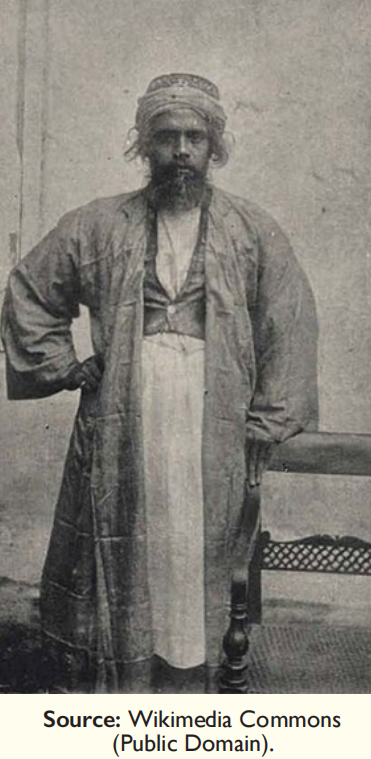
The Cochin Jews are considered one of the oldest Jewish groups in India, claiming to be from the era of the biblical King Solomon.3 Ancient legend dates the first settlement of Jews in Cochin to the destruction of the First Temple in Jerusalem in 586 B.C., where some Jews were exiled, and subsequently made their way to India. The first physical records of Jews in Cochin date to 70 A.D., after the destruction of the Second Temple in Jerusalem, when Jewish settlers arrived in Cranganore, a port near Cochin.4
The Jews of Cochin maintained a harmonious relationship with the local Indian rulers. The Jewish community in Cochin received a set of copper plates called “Sâsanam” granting them privileges such as self-rule and a portion of tax revenue.5 Although the copper plates are physically inscribed with the date 379 A.D., they are thought to be from the early 11th century.6 Regardless of its date, the copper plates serve as a physical testament to the amicable nature of the Indian-Jewish relationship in Cochin. Post 1947, when India became independent from Britain, and there was an emphasis on the partition of India, many Jews emigrated to Israel. The Indian Jews who emigrated still continue to speak Malayalam.7 Several synagogues remain to this day and are preserved as historical sites.
Paradesi (literally meaning ‘foreign’ due to their late arrival to the Indian subcontinent) Jews are those who immigrated to India during the 15th and 16th centuries from Spain and Portugal after the expulsion of the Jews from Spain in 1492 by King Ferdinand II of Aragon and Queen Isabella I of Castille, and the expulsion of the Jews from Portugal in 1496 by King Manuel I. One place in India that the Paradesi Jews settled in was Madras, and the Paradesi Jews there subsequently became known as the Madras Jews. The Madras Jews specialized in trading Golconda diamonds (diamonds from mines in Golconda, India), other valuable stones, and corals.8 Those Sephardic Jews included many from Amsterdam, who had fled the Spanish and Portuguese inquisitions earlier, but ultimately migrated to Madras. The Madras Jews, like the Cochin Jews, possessed good relations with the local Indian community and its government. While the history of the Paradesi Jews is less ancient than that of the Cochin Jews, it also serves as a demonstration of the special relationship between the Indian and Jewish communities.
Another group of Jews that migrated to India were the Nagercoil Jews, also known as the Musta’arabi (Musta’arabi, literally meaning “arabized” in both Arabic and Hebrew) Jews and the Syrian Jews. The Nagercoil Jews were Arab Jews who arrived in Nagercoil in 52 A.D. According to legend, the Nagercoil Jews arrived with St. Thomas or Thomas the Apostle, who traveled to India to preach the Gospel.9 Like many other Jewish communities, the Nagercoil Jews were merchants, maintaining trade connections in Europe and throughout India. Their presence in Nagercoil was met with tolerance and no persecution; additionally, their language skills were useful to the local government. Compared to other Jewish groups in India, less is known about the Nagercoil Jews.
The Jews of Goa possess a similar history to the Paradesi Jews, with Spanish and Portuguese (Sephardic) Jews fleeing persecution from the Inquisition to Goa. While the Kingdom of Portugal established an Inquisition within its borders, it did not extend to its colonies until 1536. Many Sephardic Jews that settled in India became conversos, or New Christians, Jews who practiced Judaism in secret, but outwardly maintained Christian identities. In India, it was more difficult for the Inquisition to investigate them, making it a desirable place to both secretly practice Judaism, and maintain their professions as merchants in the Portuguese Empire.10 Many Jews in Goa eventually made their way to other Jewish communities already established in India.

The Bene Israel community is perhaps one of the most complex Jewish groups in India, claiming to be descendants from the Ten Lost Tribes of Israel.11,12,13 According to legend, the ancestors of the Bene Israel community are descended from fourteen Jews fleeing persecution from the Greeks in ancient Judea, who ended up in India after a shipwreck. When I visited the Bene Israel community in Mumbai and Alibag, I had the privilege of being shown a monument marking the place of the shipwreck that brought the Bene Israel to the Indian subcontinent. When they arrived, the Bene Israel took up the oil pressing trade, and did not work on the Sabbath, earning themselves the nickname “shanivar teli,” meaning “Saturday oil-presser.” Over time, the Bene Israel became integrated into the local Indian communities, while still preserving some Jewish customs, such as circumcision.3 Since the Bene Israel Jews were highly integrated with the local Indian communities, they faced little discrimination in India. During my travels in India, I had the privilege of meeting Ralphy and Yael Jhirad, Bene Israel Jews who currently live in Maharashtra. They expressed the struggles of not being recognized as “real Jews” by many various Jewish communities due to their history of being disconnected from the broader global Jewish community.
The Baghdadi Jews, or Iraqi Jews, originating from mostly Baghdad, and other parts of the Middle East including Syria, Egypt, Yemen, Iran, and Turkey, began to settle in India (primarily in its port cities) in the 18th century.14,15,16,17 The first Baghdadi merchant colony to be established in India was in Surat, in 1730. By the end of the 18th century, there were about 100 Baghdadi Jews living in Surat. In the early 19th century, there was an uptick in antisemitism in Mashhad, Iran and Aleppo, Syria, as well as an outbreak of plague in Baghdad, causing Jews from these communities to migrate to places like India. Eventually, the Baghdadi Jews spread to cities like Bombay and Calcutta, where there were more trade opportunities available. Before the onset of World War II, there were approximately 11,000 Baghdadi Jews in South Asia.14 A few Baghdadi Jewish families, such as the Sassoon family, possessed great fortunes from their professions in trade; however, the overwhelming majority of Baghdadi Jews in India lived in poverty, resembling an oligarchic society. While the Baghdadi Jews in India were treated with tolerance by the local Indian communities, they faced discrimination from British rulers. Following the Partition of India and the ethnic tensions that emerged, many Jews immigrated to the newly established state of Israel, Australia, or Britain. Overall, the Baghdadi Jewish community viewed their experience in India positively, regarding the fact that they had never experienced antisemitism as a unique privilege.
The Bene Menashe Jews have a similar origin story to the Bene Israel Jews, also claiming to be descended from the Ten Lost Tribes of Israel; however, DNA testing does not support their claims (unlike the Bene Israel Jews, which possess Middle Eastern DNA). For centuries, they practiced a form of pseudo-Judaism, but for the most part, were unaware of most Jewish customs. In 2005, however, the Sephardic Chief Rabbi of Israel officially recognized the Bene Menashe as a lost tribe of Israel.18
An ethnographic study in Israel “among a community of immigrants from the Eastern Indian states of Manipur and Mizoram, Bene Menashe,” discusses “how these immigrants have used ethnic identity to further integrate into mainstream Jewish and Israeli society.”19 The authors of the 2025 article in the Asian Studies Review note:
Originally known as the Kuki-Chin-Mizo, Bene Menashe claim to be descendants of the lost tribes of Israel, cut off from other Jews for 2,700 years. Several thousand members of the community have emigrated to Israel since the 1990s…Bene Menashe’s background as a singular community of East Asian immigrants in the peripheral town of KA and as recent converts to Judaism, as well as their Zomian (Upland Southeast Asian) background, are central to the community’s negotiation of ethnoreligious identity. Their efforts to integrate into contemporary Israeli society often contrast with the drive of Israeli cultural agents to emphasise the group’s lost tribal heritage, and the community has also both emphasised and sought to discard their previous ethnic identity.
A traditional harvest festival song called “Sikpui Ruoi” has been used to make the disputed claim that the Bene Menashe Jews are descended from the ancient Israelites.20,21 “Sikpui Ruoi” lyrics are below:
While we are preparing for the Sikpui Feast,
The big Red Sea becomes divided;
As we march along fighting our foes,
We are being led by pillar of cloud by day,
And pillar of fire by night.
Our enemies, O ye folks, are thick with fury,
Come out with your shields and arrows.
Fighting our enemies all day long,
We march forward as cloud-fire goes before us.
The enemies we fought all day long,
The big sea swallowed them like wild beast.
Collect the quails,
And draw the water that springs out of the rock.20
Like the Bene Menashe Jews and the Bene Israel Jews, the Bene Ephraim Jews also claim to be descended from the lost tribes of Israel (instead of claiming to be descended from the biblical Menashe, they claim to be descended from the biblical Ephraim).21 However, the Bene Ephraim Jews were never officially recognized as Jews by any official rabbinate bodies and cannot emigrate to Israel as a result.22,23 The Bene Menashe Jews and Bene Ephraim Jews faced no antisemitism from the Indian community, partially due to their assimilation and integration into broader Indian society, and research on Andhra Pradesh demonstrates the importance of context.24,25,26
Despite the differences in India’s diverse landscape of Jewish communities, a common denominator is clearly present: the general lack of antisemitism and presence of religious tolerance. This common denominator of Jewish communities in India is unique to India: Jews faced antisemitism in both Europe and the Middle East (on a much higher scale in Europe) but not in India. In this paper, I explore the reason for India’s unique religious tolerance through a qualitative comparative case study of Jewish communal life in India, Europe, and the Middle East.
Materials and Methods
This paper utilizes a qualitative comparative case study to investigate why Jewish communities in India experience little to no antisemitism, in contrast to Jews in Europe and the Middle East. The research for this paper incorporates historical records, academic literature, and field observations conducted during travel to India. The methodology for this paper includes a comparative historical analysis to identify patterns of religious tolerance and antisemitism across three contexts: India, Europe, and the Middle East. The dependent variable is the presence or absence of antisemitism, defined broadly to include legal restrictions, social discrimination, forced conversion, and violence. The independent variables include religious ideologies (Hinduism, Christianity, Islam), cultural norms, and Jewish integration vs. separation.
Each case (India, Europe, and the Middle East) is evaluated through the lens of these variables to assess the structural, social, and theological conditions shaping the experiences of various Jewish communities across the globe. Furthermore, this study treats the Indian Jewish community as a group of distinct communities (such as the Cochin Jews, Bene Israel, Baghdadi Jews, etc.) rather than as a monolith. The collective absence of antisemitism within so many diverse Jewish communities in India offers a unique counterpoint to other negative experiences that Jews faced in Europe and the Middle East.
Results
This section addresses the central research question: Why have Jewish communities in India faced no antisemitism, compared to Jews in Europe and the Middle East who faced a considerable amount of antisemitism? A comparative analysis reveals that India’s unique social, religious, and geopolitical conditions played a crucial role in fostering a more tolerant environment for Jews. Several factors account for India’s tolerance of its diverse Jewish communities including its religious pluralism, geopolitical distance of India from Europe and the Middle East, a Hindu majority in India, and the integration of the Jews with the local Indian communities.
One of the most significant variables is India’s diverse religious landscape and pluralism. India is known for being home to a multitude of religious minorities, including Muslims, Christians, Sikhs, Buddhists, Jains, Zoroastrians, and of course, Jews. Why have so many religious minorities been tolerated in India? Regardless of their various levels of conflict with the Hindu majority, the communities have been tolerated enough to remain, unlike other countries such as for example, Zoroastrians in the Middle East. Unlike Christianity or Islam, Hinduism is a non-proselytizing, non-monotheistic religion, and is not supersessionist. As a result, it lacks the historical framework for religiously motivated antisemitism.2,3 In India, Jews were often viewed as one of many religious groups, rather than a unique anomaly, within a more inclusive general social fabric. The non-proselytizing nature of the Jewish religion also contributed to the absence of religious tension. Indian Jews didn’t attempt to convert others to Judaism and were not perceived as religious competitors.
Another important variable to consider is the integration of the Indian Jews into the broader Indian social fabric and society, which occurred organically.27 Unlike in Europe and the Middle East, Indian Jews often did not have their own quarters, villages, or neighborhoods, and lived and intermingled with their non-Jewish neighbors. A staple of Jewish life in Europe was the shtetl, small rural towns consisting of predominantly Jewish residents; a staple of Jewish life in the Middle East was separate Jewish quarters within cities, such as the mellahs in Morocco. The separation of Jews and non-Jews, historically, was both forced by and chosen by local rulers. However, in India, no such concept was prevalent. The Jews also adopted local languages and cultural aspects while still maintaining traditional Jewish customs. While Jews in the Middle East often adopted local languages, dress, and cultural aspects, their integration was not comparable to that of the Indian Jews; notably, the Bene Israel and more ancient Jewish communities in India. Furthermore, Middle Eastern Jews experienced less antisemitism than European Jews, correlated with both levels of integration and religious environments. These two concepts taken together, provide evidence that suggests Indian Jews’ lack of experienced antisemitism was due to India’s pluralistic religious environment, cultural openness to minority groups, and non-dominance of Christianity or Islam.
Conclusions
The experiences of Jewish communities in India stand out as a remarkable anomaly in the broader narrative of Jewish history and the Jewish Diaspora. Unlike in Europe or the Middle East, where Jews were often subjected to violence, exclusion, and systemic restrictions, India has offered a tolerant environment where Jews could thrive. Religious pluralism and the nature of Hinduism provided a theological foundation for tolerance in contrast to supersessionist ideologies embedded within Christian and Islamic societies. The social and economic integration of Indian Jews provided less separation than Middle Eastern and European Jews from broader non-Jewish society and allowed for more broader acceptance. India’s pluralistic religious environment, shaped by an inclusive Hindu worldview the core principle of which can be summed up in the phrase ‘Vasudaiva Kutumbakam,’ which means the world is one family, played a crucial role in fostering a tolerant atmosphere.28 Ultimately, the Indian Jewish experience offers a distinctive counter-narrative to dominant Jewish histories of persecution. Understanding the structural, cultural, and theological conditions that enabled Jews to thrive in India may serve scholars when thinking about society today.
Acknowledgments: This paper was initially developed for the course, “India Today: Economics, Politics, Innovation & Sustainability,” taught by Professor Holli A. Semetko in the Department of Political Science, Emory College of Arts and Sciences, Emory University in Atlanta, Georgia. I want to thank Professor Semetko for her mentorship and guidance throughout the course and beyond.
References
- International Holocaust Remembrance Alliance (IHRA). Working definition of antisemitism. IHRA plenary in Bucharst. 26 May 2016. Accessed Dec. 2, 2025. https://holocaustremembrance.com/resources/working-definition-antisemitism
- Schreiber M. The Shengold Jewish Encyclopedia.; 2003. https://archive.org/details/shengoldjewishen0000unse
- Weil S. Jews in India. In: Mark Avrum Ehrlich, 1st ed. Encyclopedia of the Jewish Diaspora: Origins, Experiences, and Culture. ABC-CLIO, Vol 2. 2008:1204-1212.
- Katz N. Who Are the Jews of India? University of California Press; 2001. DOI: 9780520213234
- Blady K, Kaplan S. Jewish Communities in Exotic Places. Jason Aronson; 2000.
- Haeem S. The History of the Bene Israel of India. Tel Aviv-Yafo Dayag Press, Ltd. and London UK: George Salby; 1937. DOI: 990020458210205171
- Segal JB. A History of the Jews of Cochin. Vallentine Mitchell; 1993. DOI: 9780853032526.
- Gill L. Chennai: Where Life is Enshrined. The Jewish Chronicle. May 30, 2024. Accessed May 26, 2025. https://www.thejc.com/life/travel/chennai-where-life-is-enshrined-jlokmz9i
- Sathyendran N. The church that St. Thomas built. 17 Nov. 2021. Accessed Dec. 2, 2025. https://www.thehindu.com/features/metroplus/the-church-that-st-thomas-built/article4720703.ece
- Subrahmanyam, S. Jews & New Christians in Portuguese Asia 1500-1700. The Library of Congress. Accessed May 26, 2025. https://www.loc.gov/item/2021689138/
- Parfitt T. The Lost Tribes of Israel: The History of a Myth London, UK: Weidenfeld & Nicolson. 2002.
- Schwarz J. Book Review. The Lost Tribes of Israel: The History of a Myth. Journal of Jewish Studies. 2004; 55(1) https://doi.org/10.18647/2542/JJS-2004
- Weil S. On Origins, the Arts, and Transformed Identities: Foci of Research into the Bene Israel. In: Katz N., Chakravarti R., Sinha B.M., Weil S. (eds) Indo-Judaic Studies in the Twenty-First Century. 2007. Palgrave Macmillan, New York. https://doi.org/10.1057/9780230603622_9
- Musleah EN. On the Banks of the Ganga: The Sojourn of Jews in Calcutta. Christopher Pub. House; 1975.
- Cernea RF. Almost Englishmen: Baghdadi Jews in British Burma. Lexington Books; 2007.
- Adler C, Singer I. The Jewish Encyclopedia: A Descriptive Record of the History, Religion, Literature, and Customs of the Jewish People from the Earliest Times to the Present Day.; 1916. New York and London: Funk and Wagnalls.
- Slapak O. The Jews of India: A Story of Three Communities. Israel Museum; 1995.
- Weil S. ed. The Baghdadi Jews in India Maintaining Communities, Negotiating Identities and Creating Super-Diversity. London, Routledge. 2019.
- Green DB. 2005: Sephardi Chief Rabbi recognizes “lost tribe” of Indian Jews. Haaretz.com. March 30, 2014. Accessed May 26, 2025. https://www.haaretz.com/jewish/2014-03-30/ty-article/2005-lost-indian-tribe-recognized/0000017f-dc41-db22-a17f-fcf18c540000
- Elazar, G., & Billig, M. The Immigration and Strategic Assimilation of Bene Menashe: A Zomian Jewish Community in Israel. Asian Studies Review. 2025; 49(2), 424–442. https://doi.org/10.1080/10357823.2024.2381777
- Dena L. and Zothangchhingi K. 2011. Sikpui Ruoi (Sikpui Festival): A festival with a difference. Accessed Dec. 2, 2025. http://www.virthli.in/2011/02/sikpui-ruoi-sikpui-festival-festival.html
- Dena L. In Search of Identity: Hmars of North-East India. New Delhi: Akansha Publishing House, 2022.
- Samra M. The Benei Menashe: Choosing Judaism in North East India. The Journal of Indo-Judaic Studies. 2001; 12: 45-56. Accessed Dec. 2, 2025. https://indo-judaic.com/journal-of-indo-judaic-studies-12
- Egorova Y. Redefining the Converted Jewish Self: Race, Religion, and Israel’s Bene Menashe. American Anthropologist. 2015; 117: 493-505. https://doi.org/10.1111/aman.12293
- Egorova Y & Perwez S. The Bene Ephraim of Andhra Pradesh, India. Kulanu. 2011. Accessed May 26, 2025. https://kulanu.org/communities/india/bene-ephraim-andhra-pradesh-india/
- Egorova Y & Perwez S. The Jews of Andhra Pradesh: Contesting Caste and Religion. Oxford UK: Oxford University Press, 2013.
- Jacob A & Esler J. Keeping the Faith: The Jews of India. In: Esler, J and Fielding M, eds. Religion and Identity in the Indian Ocean World. Bloomsbury Academic USA. 2025. Accessed Nov. 20, 2025 at Google Books.
- Press Trust of India (PTI). India among few countries with no record of anti-Semitism: Indian envoy to the US. The Hindu. 13 December 2019. Accessed Nov. 20, 2025 at https://www.thehindu.com/news/international/india-among-few-countries-with-no-record-of-anti-semitism-shringla/article30294831.ece
Disclaimer/Publisher’s Note: The statements, opinions and data contained in all publications are solely those of the individual author(s) and contributor(s) and not of SSSUHE and/or the editor(s). SSSUHE and/or the editor(s) disclaim responsibility for any injury to people or property resulting from any ideas, methods, instructions, or products referred to in the content.